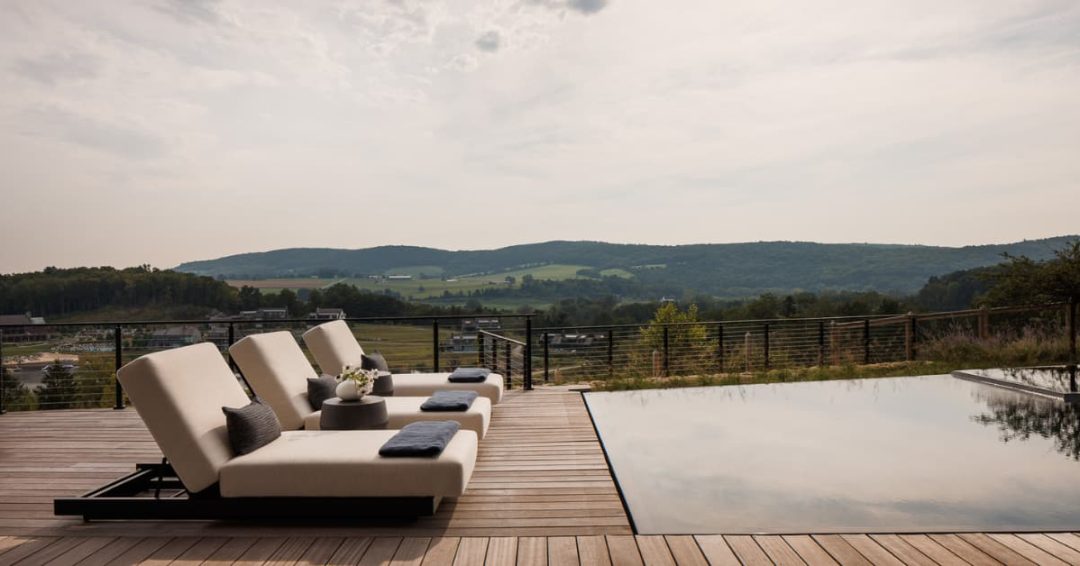
Standing on a windswept lot in Southampton with architectural plans in hand, I’ve been asked the same question more times than I can count.
“Can we really build something modern here that will last?”
The question isn’t about style. It’s about survival. About whether a multi-million dollar investment will hold up against FEMA regulations, flooding risks, and the relentless assault of coastal weather. About whether clean lines and floor-to-ceiling glass can coexist with hurricane-force winds and corrosive salt air.
Building in the Hamptons isn’t just about creating a beautiful modern home. It’s about mastering a complex choreography of floodplain engineering, privacy strategies, and material science that most architects never encounter. Get it wrong, and you’ll face insurance nightmares, structural failures, or a home that looks weathered within five years. Get it right, and you’ll have a retreat that feels effortless while quietly resisting everything nature throws at it.
After nearly two decades designing luxury coastal homes, I’ve learned that the Hamptons modern home projects demand a different kind of architectural thinking. One that balances modernist principles with brutal practicality. Where every design decision must answer to both aesthetic vision and engineering reality.
Here’s what that actually looks like.
Why Most Architects Get Hamptons Projects Wrong
Most people come to the Hamptons with a vision pulled from Architectural Digest. Clean concrete. Walls of glass. Cantilevered terraces hovering over manicured lawns. They assume that hiring a talented architect means simply translating that vision into blueprints.
That assumption will cost you hundreds of thousands of dollars and years of frustration.
The Hamptons isn’t Malibu or Martha’s Vineyard. It’s a barrier island with unique regulatory constraints, flood zones that change every decade, and building codes that reflect hard lessons from Hurricane Sandy. Many architects who work primarily inland hit a wall when they encounter the realities of coastal construction. They design beautiful homes that insurance companies won’t cover or that require foundation systems they’ve never specified.
Early in my career, we designed a contemporary home in Bridgehampton with a partially buried lower level for a wine cellar and home theater. The renderings were spectacular. Then the surveyor delivered the FEMA flood maps. The entire site sat in a high-risk flood zone. We had to elevate the entire structure four feet, reconfigure the foundation system, and redesign the approach sequence. The budget jumped by $380,000 before we’d poured a single footer.
That experience changed how I approach Hamptons modern home projects. Instead of designing first and adapting to constraints later, we now begin with site realities. Flood zones. Setback requirements. View corridors. Wind load calculations. Soil percolation rates. These aren’t obstacles to design – they’re the framework that generates truly intelligent architecture.
The architects who understand this produce homes that feel inevitable rather than imposed. Homes where the elevation strategy becomes an architectural feature rather than a compliance burden. Where the privacy walls that satisfy setback requirements also frame the perfect outdoor living sequence.
Let me show you how this works in practice, starting with the single most important factor in Hamptons modern home construction.
The Floodplain Reality No One Tells You About
Every piece of buildable land in the Hamptons exists within one of several FEMA flood zones. Your zone designation determines everything from your foundation system to your insurance premiums to whether you can build at all.
The zones break down like this:
- V Zones (Coastal High Hazard) – Properties directly on the ocean or bay, subject to wave action during storms. These require the most stringent building standards.
- A Zones (Special Flood Hazard) – Areas with significant flood risk but less wave action. Still requires elevation and flood-resistant construction.
- X Zones (Moderate to Low Risk) – Properties outside primary flood areas. Fewer restrictions, but not exempt from consideration.
Most desirable Hamptons properties fall into V or A zones. This means your home must be elevated above the Base Flood Elevation (BFE) – the level water is expected to reach during a 100-year flood event. In many Hamptons locations, that’s 8 to 12 feet above existing grade.
Here’s what that elevation requirement actually means for your home:
Foundation Systems
You can’t build on a conventional slab. Instead, you need either an elevated slab on stem walls with breakaway panels or, more commonly, a pier and beam foundation system. We typically use reinforced concrete piers that extend below the frost line, topped with steel or engineered wood beams. The space below the elevated first floor must remain open or use breakaway walls that collapse under flood pressure without compromising the structure above.
Access and Arrival
When your front door sits 10 feet above ground level, the entry sequence becomes an architectural challenge and opportunity. We’ve solved this with everything from landform berms that create a gradual approach to dramatic bridge-like entries that make the elevation feel intentional rather than regulatory. Some projects use landscaped ramps that wind through native grasses, transforming a code requirement into a meditative arrival experience.
Mechanical and Utilities
Everything mechanical, HVAC systems, electrical panels, and water heaters must sit above the BFE. This changes the entire infrastructure layout of your home. We often create a dedicated mechanical mezzanine or integrate systems into the roof assembly. For properties with pools, all equipment must be elevated or located in a separate, compliant structure.
Material Restrictions
Below the BFE, you’re limited to flood-resistant materials. No wood framing or gypsum dryboard. We use marine-grade concrete, closed-cell foam insulation, and corrosion-resistant metal components. This is actually where modern architecture has an advantage. Materials like concrete, steel, and glass – the palette of contemporary design – align naturally with flood-resistant construction.
Permitting Timeline
FEMA compliance adds layers to the approval process. Beyond standard building permits, you need elevation certificates from licensed surveyors, flood zone determinations, and, in some cases, environmental impact reviews. Plan on 6-9 months for permitting alone, longer if your design requires variances.
The financial impact is substantial. Floodplain-compliant construction typically adds 15-25% to base construction costs. But here’s what most people miss – this isn’t optional spending you can value-engineer out later. You either build to these standards, or you don’t build. The alternative is a home you can’t insure and can’t legally occupy.
I’ve seen projects where architects unfamiliar with coastal requirements submitted designs that couldn’t be permitted. The clients lost a year and $200,000 in design fees before starting over with a firm that understood the reality of Hamptons modern home construction.
The good news is that when you work with an architect who thinks in these terms from day one, floodplain requirements become design generators rather than design compromises. That elevated first floor creates opportunities for dramatic ceiling heights. The open foundation area becomes covered parking or an outdoor living space. The material restrictions push you toward a refined material palette that ages beautifully.
On projects where we’ve embraced rather than fought elevation requirements, the results speak for themselves. Homes that sit like pavilions floating above their sites, with ground levels becoming shaded outdoor rooms framed by structural piers. Guests arrive along paths that gradually rise through beach grasses, emerging onto main living levels with expansive water views. The elevation requirement becomes the architecture.
How to Achieve Privacy Without Building a Fortress
The Hamptons presents a peculiar privacy challenge. Properties are expensive enough that lots tend to be generous – one to three acres is common. Yet the flat topography, lack of mature tree cover on many sites, and the sheer number of homes packed into a relatively small area means you’re often more visible than you’d expect.
Your neighbors aren’t the only concern. The Hamptons have become a destination for architecture tourism. High-end homes appear in shelter magazines, on Instagram, and on house-hunting blogs. If you build something striking, people will drive by. They’ll slow down. They’ll take photos. Some will stop and stare.
For clients who value discretion – and most of my clients do – this visibility feels like a violation. They didn’t invest $5 million in a second home to become a local attraction.
The solution isn’t simply building tall privacy fences. Most Hamptons towns restrict fence heights to 6 feet, and a fortress-like wall surrounding a modern glass house defeats the purpose of the architecture. Instead, privacy requires a more sophisticated approach that combines site planning, landscape architecture, and massing strategies.
Setback Strategy
Hamptons zoning typically requires substantial setbacks – 50 to 100 feet from front property lines, 20 to 50 feet from side and rear lines. Most architects treat these as constraints to minimize. We use them strategically. By pushing the house back farther than required and using the front yard for landscaping, we create depth and screening. A home set 150 feet back from the road behind layered plantings becomes nearly invisible from the street, even with substantial glazing.
Landscape as Architecture
We design the landscape and architecture simultaneously. Native plantings – beach plums, bayberry, eastern red cedar, pitch pine – create naturalistic screening that feels indigenous rather than defensive. These aren’t decorative foundation plantings. They’re carefully composed to block sightlines while preserving views. On Amagansett projects, we’ve used mature pine groves along property lines, creating complete privacy from neighboring homes while framing views toward the ocean.
Massing and Orientation
A home’s shape determines what can be seen and from where. Rather than designing a simple rectangular volume, we create more complex forms where private spaces – primary bedroom, spa, study – face away from public areas or toward protected courtyards. Living areas with large glass walls orient toward views and private outdoor spaces, not toward the street or neighbors.
Recent projects in East Hampton have used C-shaped plans wrapped around central courtyards. All the glass faces inward, toward the courtyard and private lawn beyond. From the street, you see only refined facades of board-formed concrete and ipe wood. The transparency and openness exist entirely within the private realm of the property.
Vertical Screening Elements
Sometimes the site doesn’t allow for landscape screening alone. In those cases, we use architectural elements – slatted screens, perforated metal panels, movable louvers – to create privacy without feeling closed off. These screens can be beautiful design elements in their own right. Vertical weathered steel fins along facades can block low afternoon sun, reduce visibility from neighboring properties, and create statements. From inside, they frame views into vertical slices. From outside, they obscure interiors while allowing breezes and filtered light through.
Strategic Opacity
Not every wall needs to be glass. One of the mistakes I see in contemporary residential design is the assumption that modern means maximum transparency. In reality, the best modern homes use opacity strategically. Solid walls create privacy, reduce heat gain, provide surfaces for art, and make the moments of transparency more powerful by contrast. When every wall is glass, no view is special.
The most successful Hamptons modern homes I’ve designed feel completely private despite sitting on relatively exposed sites. You can live with the curtains open, walk around freely, and use your outdoor spaces without self-consciousness. That sense of sanctuary is as important as any design detail.
The Materials That Actually Survive Coastal Conditions
Salt air is invisible but relentless. It infiltrates every crevice, corrodes metal, degrades finishes, and accelerates aging. The Hamptons sit less than two miles from the Atlantic on most properties, closer on oceanfront sites. That proximity means your home exists in a perpetual state of chemical attack.
I’ve watched beautiful homes deteriorate rapidly because architects specified materials appropriate for Manhattan but catastrophic for coastal exposure. Steel window frames that rust within three years. Wood siding that warps and splits. Stone cladding that spalls and stains. Outdoor furniture that disintegrates. The material failures aren’t just aesthetic – they compromise building envelopes, create water infiltration, and generate expensive ongoing maintenance.
After nearly 20 years of coastal work, here’s what actually holds up:
Exterior Cladding
Your exterior material choice might be the single most important durability decision you’ll make. We default to a short list of proven performers:
- Ipe or Cumaru Wood – Incredibly dense South American hardwoods that weather to silver-gray without rotting. Expensive upfront, but essentially maintenance-free for decades.
- Board-Formed Concrete – Poured-in-place concrete with wood grain texture. Permanent, beautiful, and improves with age. Works particularly well for plinth levels and foundation walls that take the most abuse.
- Fiber Cement Panels – Modern alternative to wood siding. It can be detailed to look refined. Takes paint well and holds up better than natural wood.
- Weathering Steel (Corten) – Forms a protective rust patina that prevents further corrosion. Dramatic appearance that clients either love or hate.
We avoid standard painted wood siding (requires repainting every 3-5 years), stucco (cracks and stains in humid climates), and most stone cladding (unless carefully detailed with ventilated rainscreen systems).
Windows and Doors
This is where you can’t compromise. Coastal exposure demands premium systems.
We specify marine-grade aluminum windows and doors with factory-applied marine-grade finishes – typically anodized or powder-coated. The frames need thermal breaks to prevent condensation. The hardware must be stainless steel, not zinc alloy, which will corrode. The glass should be laminated for hurricane resistance and sound insulation.
Yes, these windows cost three to four times what standard residential windows cost. But they’ll operate smoothly 20 years from now, while builder-grade windows will be frozen, corroded, and leaking.
Metal Elements
Every piece of exposed metal – railings, hardware, light fixtures, address numbers – needs to be stainless steel (316 marine grade), bronze, or weathering steel. Avoid aluminum unless it’s anodized or powder-coated. Never use zinc or pot metal castings. The corrosion will be embarrassing and expensive.
Roofing
Standing seam metal roofing is the gold standard for coastal homes. It sheds water efficiently, handles high winds, and lasts 50+ years. We typically use zinc, copper, or painted steel. Avoid asphalt shingles – they deteriorate rapidly in coastal conditions and blow off in high winds.
Decking and Outdoor Materials
For exterior decking, we use the same Ipe or Cumaru we use for cladding. It costs more than composite decking initially but outlasts it by decades and looks substantially better. For pool decking and patios, we prefer natural stone like bluestone or thermally modified ash. Poured concrete with integral color or architectural concrete finishes also works well.
Paints and Finishes
When we do use painted surfaces, we specify marine-grade coatings designed for coastal exposure. These formulations include additional UV inhibitors and anti-corrosive additives. Even interior paints should be premium formulations with mildew resistance – the humidity and salt air penetrate deeper into homes than you’d expect.
The Stone and Wood Sourcing Approach
At some of our projects, like the homes at Silo Ridge in New York, we’ve been able to use stone and wood sourced directly from the building site. This approach creates several advantages beyond sustainability messaging. Site-sourced materials are inherently adapted to local climate conditions. They age in a way that feels continuous with the surrounding environment. And they create a unique connection between the home and its location that can’t be replicated.
In the Hamptons, where many sites have been cleared and don’t offer significant on-site materials, we look for regional sources. Long Island stone suppliers often carry granite and bluestone quarried within 100 miles. Local sawmills can source eastern white pine and oak from regional forests. These materials cost less than imported options while performing better in local conditions.
The material philosophy I’ve developed over years of coastal work is simple – use fewer materials, better quality, and let them age naturally. A home clad in three carefully selected materials that weather beautifully will always outlast and outperform a home with a dozen materials fighting for attention and fighting the environment.
A Real Hamptons Modern Home Project: From Vision to Reality
Let me walk you through a recent Southampton project that illustrates how all these principles come together. The clients wanted a 7,500-square-foot home for extended family gatherings. The site was 2.1 acres in a Special Flood Hazard Area (Zone AE), with a BFE elevation of 9 feet above the existing grade.
The program was ambitious – six bedrooms, great room with 14-foot ceilings, chef’s kitchen, home theater, spa with treatment rooms, pool with pool house, and substantial outdoor living areas. They wanted a modern aesthetic but were concerned about durability and privacy. The budget was $8.2 million for architecture, construction, and landscape.
Site Strategy
The lot ran east-west with road access from the south and views toward Mecox Bay to the north. Neighboring homes sat relatively close on the east and west sides – about 75 feet away. We pushed the house north toward the view, creating a 180-foot setback from the road. This distance allowed us to build a substantial landscape buffer – three staggered rows of native trees and grasses that screen the house almost completely from the street.
Elevation Solution
Rather than elevating the entire house uniformly, we created a split-level strategy. The main living areas sit at the required elevation, creating dramatic ceiling heights and a commanding position with views toward the bay. We embedded the bedroom wing partially into the site at a lower level, using earth berming on three sides. This reduced the apparent mass of the house from the road and neighboring properties while keeping the bedrooms within the flood-compliant envelope through careful grading and foundation detailing.
Privacy and Massing
The floor plan is an elongated H-shape. The public wing – living, dining, kitchen – occupies the north bar of the H, entirely glazed toward the view. The bedroom wing forms the south bar, mostly solid except for windows facing into the central courtyard. The two wings connect via a glass-enclosed gallery that houses the entry, spa, and vertical circulation.
This configuration means the extensive glazing in public spaces faces north toward private views, while the south facade toward the road remains relatively opaque. From neighboring properties, you see carefully composed elevations of board-formed concrete and ipe wood rather than a fishbowl effect.
Materials
We used an intentionally limited palette:
- Board-formed concrete for the foundation and lower-level walls
- Ipe wood rainscreen cladding for upper-level volumes
- Standing seam zinc roof
- Marine-grade aluminum windows and doors with dark bronze anodized finish
- Bluestone for all paving and pool coping
- Ipe for exterior decking
The entire material palette consists of six elements, each selected for longevity and coastal performance. Nothing requires painting or significant maintenance. The ipe will silver over time. The concrete will develop patina. The zinc will develop its characteristic blue-gray carbonate layer. The home will age rather than deteriorate.
Outdoor Living
The central courtyard became the heart of the outdoor program. Protected from wind and invisible from any public vantage point, it houses the pool, spa, outdoor kitchen, and multiple seating areas. The courtyard floor is a composition of bluestone pavers and concrete ribbons with native grasses between, creating a contemporary interpretation of the Hamptons’ character.
The pool house sits at the north end of the courtyard as a smaller pavilion that echoes the main house materials and detailing. It contains a full bath, changing areas, equipment storage, and a covered outdoor living room with a fireplace.
Results
The project took 28 months from initial site visit to completion. The construction cost came in at $7.4 million, leaving budget for completion and some FF&E. The home performed flawlessly through its first winter and received flood insurance at favorable rates due to the elevation strategy and construction quality.
But the real success was experiential. The clients report that they live with every curtain open, use the outdoor spaces constantly, and feel completely private despite the relatively close neighbors. The materials have begun their aging process exactly as anticipated – the ipe is silvering unevenly in a way that adds character, the concrete has developed subtle tonal variations, and the zinc roof has developed its protective patina.
Three years in, the home requires essentially zero maintenance beyond standard cleaning. No painting. No repairs. No regrets about material choices.
What to Expect When Building in the Hamptons
Building a modern home in the Hamptons isn’t a transaction you complete in a few months with a design-build firm and a stack of pre-drawn plans. It’s a partnership that requires expertise in coastal engineering, local regulatory systems, and the specific architectural language that makes sense in this environment.
Here’s what the process actually looks like when you work with an architect who understands Hamptons modern home construction:
Phase 1: Site Analysis and Feasibility
Before we draw a single line, we need to understand what your property allows. This means surveying, soil testing, wetlands delineation if applicable, FEMA flood zone verification, and title research for easements or restrictions. We bring in engineers early – civil, structural, geotechnical – because their input shapes what’s possible. This phase typically takes 4-6 weeks and costs $25,000-$45,000, depending on site complexity.
Phase 2: Schematic Design
Now we design. But we’re designing within the framework of reality established in Phase 1. We know the required elevations, the setbacks, the buildable area, the soil conditions, the view corridors, and the privacy challenges. The design responds to these factors rather than ignoring them. We develop 3-4 distinct schemes, test them against your program and budget, and refine the most promising direction. This phase takes 8-12 weeks.
Phase 3: Design Development
The schematic design becomes a fully resolved architectural vision. We develop the structural system, the mechanical and electrical approaches, the exterior material assembly details, and the interior spatial relationships. We select major materials and begin specifying systems. We coordinate with engineers to confirm everything can actually be built. By the end of this phase, you should be able to visualize exactly what you’re getting. Timeline is 10-14 weeks.
Phase 4: Construction Documents and Permitting
This is where architectural ideas become legally buildable buildings. We produce complete construction drawings and specifications – typically 60-80 sheets for a home of this complexity. These documents go to the building department, planning board, and often the architectural review board. The permit review process in Hamptons towns takes 6-9 months, sometimes longer if variances are needed. We attend all hearings and manage the approval process.
Phase 5: Bidding and Builder Selection
With permits in hand, we send the documents to qualified builders – typically three to five firms with coastal construction experience. The bidding process takes 4-6 weeks. We help you evaluate bids not just on price but on experience, schedule, and fit. The lowest bidder is rarely the best choice for complex coastal construction.
Phase 6: Construction Administration
Construction takes 18-24 months for a custom home of significant size. We visit the site regularly, review submittals, respond to builder questions, and verify that construction matches the design intent and quality standards. We coordinate all the FF&E selection and installation. We manage the punch list process and final closeout.
Total timeline? Plan on 3.5 to 4.5 years from property purchase to move-in. Clients who try to compress this timeline inevitably make expensive compromises or encounter delays that extend the schedule anyway.
Investment Structure
Architectural fees for a project of this complexity typically run 10-12% of construction cost. For an $8 million home, expect $800,000-$960,000 in architectural and engineering fees. Construction costs in the Hamptons run $800-$1,200 per square foot, depending on finishes and systems. A 7,000-square-foot home might cost $6-8 million to build.
Then add site work ($300,000-$600,000), landscape ($400,000-$800,000), pool and pool house ($400,000-$700,000), and FF&E ($500,000-$1,500,000). A complete project budget for a substantial Hamptons estate ranges from $10-15 million all-in.
These numbers aren’t meant to discourage you. They’re meant to establish realistic expectations so you can make informed decisions. The alternative – working with an architect or builder who low-balls numbers to win the project – leads to budget disasters and incomplete homes.
Why This Approach Works
The process I’ve described isn’t the fastest or the cheapest. But it produces homes that work – homes that age well, that satisfy regulations, that provide the privacy and quality of life you’re after. Homes that won’t embarrass you with premature deterioration or regulatory problems.
I’ve watched too many Hamptons modern home projects go sideways because clients chose architects based on beautiful renderings rather than technical competence. The renderings looked amazing. The finished homes had flood insurance problems, material failures, privacy issues, and cost overruns that strained relationships and budgets.
The right architect for a Hamptons modern home isn’t the one who promises you the moon. It’s the one who asks the difficult questions upfront, understands the regulatory and environmental challenges, and has a track record of completed projects that perform as promised.
Three Steps to Start Your Hamptons Project
If you’re serious about building in the Hamptons, start with these three steps:
First, get serious about your budget. Not what you hope to spend, but what you can actually commit to spending. Coastal construction is expensive, and underbudgeting creates compromises that undermine the entire project.
Second, assemble your property information. Survey, title report, FEMA flood maps, and any prior studies or reports. If you haven’t purchased yet, have your prospective architect review potential properties before you commit. Some sites have constraints that make them unbuildable or prohibitively expensive.
Third, interview architects who specialize in coastal luxury residential work. Look at their completed projects. Talk to past clients. Verify that they understand floodplain engineering, coastal construction, and the specific approval processes in Hampton’s towns. The architect you choose will shape every aspect of your experience and your outcome.
The Hamptons will be here long after we’re all gone. The question is whether your home will be here with it, or whether it will join the list of cautionary tales about beautiful designs that couldn’t withstand reality.
Build something that lasts. Build something that works. Build something that makes sense in this specific place at this specific moment in time.
That’s what modern architecture in the Hamptons should be.
Ready to create a home that honors both vision and place? Ralston Architects specializes in designing modern residences that respond to the unique demands of coastal living, homes built to endure, perform, and inspire for generations. Contact us today to begin your consultation and discover how thoughtful design translates aspiration into reality.