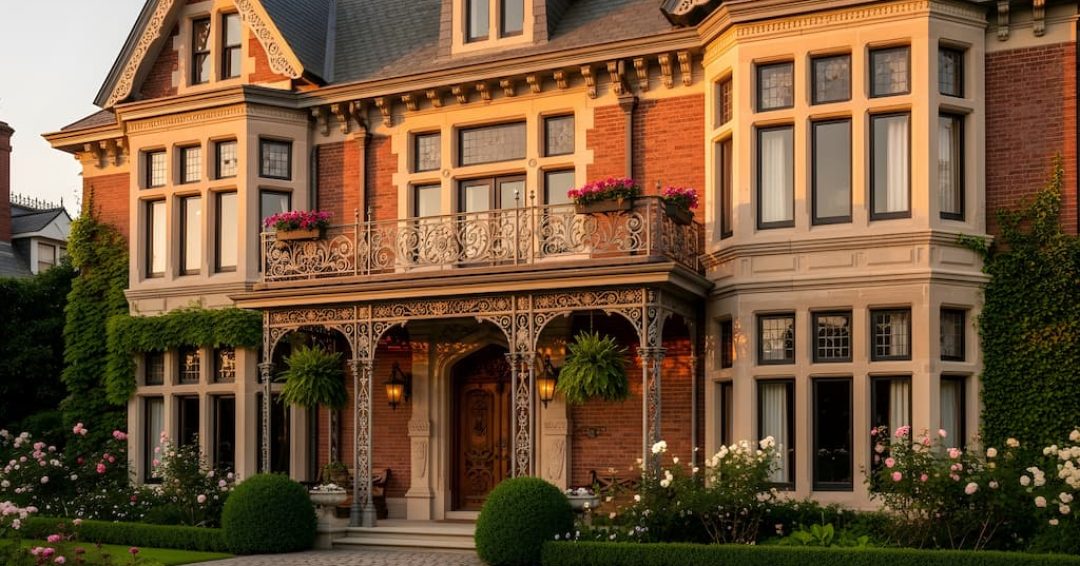
Stop building homes that fade in 30 years. If you’re investing millions into a luxury estate, you deserve architecture that outlives you – and the generation after.
I’ve spent nearly two decades designing high-end residential estates for families who understand that true luxury isn’t just about immediate gratification. It’s about creating something meaningful enough to pass down. When clients come to me asking about 100-year luxury estate design, they’re really asking: how do I build something that holds its value, its beauty, and its relevance across multiple generations?
The answer lies in two fundamental areas: material selection that resists degradation and spatial planning that adapts to evolving family needs. Most architects focus exclusively on aesthetics. I focus on permanence. Because what good is a stunning home if the materials fail in 25 years or the layout becomes obsolete before your children inherit it?
Why Most Luxury Homes Fail the Century Test
Here’s what happens when architects prioritize trends over longevity. They specify materials that look perfect in photographs but degrade rapidly in real conditions. They create floor plans optimized for today’s lifestyle without considering tomorrow’s requirements. They chase architectural fashion instead of timeless principles.
I’ve walked through enough 20-year-old “luxury” estates to know the pattern. Exterior stone veneers separating from walls. Wood siding warped beyond repair. Open floor plans that once felt modern now feeling dated and inflexible. Mechanical systems embedded in inaccessible locations. These homes weren’t designed to last – they were designed to sell.
The difference between a 30-year home and a 100-year luxury estate comes down to decisions made during the design phase. Materials matter. Layout matters. The integration of systems matters. Every choice either adds decades to your home’s functional life or subtracts them.
The Foundation of Generational Luxury Estate Design
When I talk about 100-year luxury estate design, I’m talking about a fundamental shift in how we approach residential architecture. This isn’t about building fortresses. It’s about making intelligent choices that compound over time.
Think about the great estates you’ve visited – the ones that feel as relevant today as they did 80 years ago. They share common characteristics: substantial materials honestly expressed, room proportions that accommodate multiple uses, systems designed for maintenance rather than replacement, and details that age gracefully rather than fail catastrophically.
This approach requires a different mindset. You’re not designing for the next magazine feature. You’re designing for the grandchildren you haven’t met yet. That changes everything – from how you detail a wall assembly to how you proportion a great room.
Material Selection: The 50-Year Minimum Standard
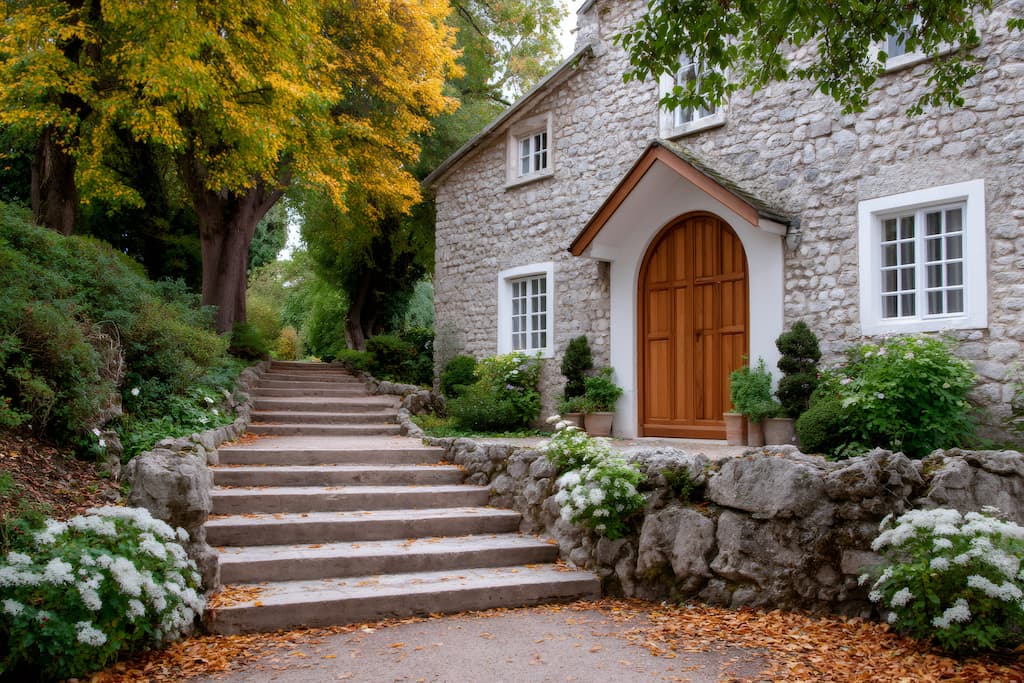
I use a simple rule: if a material can’t maintain its integrity for 50 years with reasonable maintenance, it doesn’t belong in a generational estate. This eliminates more options than you’d think.
Exterior Materials That Actually Last
Full-dimension stone masonry remains the gold standard. I’m talking about 4-inch to 8-inch limestone, granite, or sandstone – not thin veneer adhered to a substrate. The masonry bears its own weight and ties directly into the structural system. Yes, it costs $120 to $180 per square foot installed. But I’ve seen 200-year-old stone walls that still perform perfectly.
Bronze and copper architectural metals develop patinas that protect the underlying material for centuries. Windows, doors, gutters, downspouts, flashings – these components take constant abuse from weather. Aluminum and steel require paint cycles that add up to replacement costs over 50 years. Bronze and copper eliminate that cycle entirely.
Clay tile or slate roofing provides the only roofing solution worth considering for a century home. A properly installed clay tile roof lasts 75 to 100 years. Slate can exceed 150 years. Compare that to architectural shingles at 20 to 30 years or standing seam metal at 40 to 60 years. The math is straightforward – you’re either replacing your roof three times or never.
Thermally modified wood for any exterior wood applications. The thermal modification process permanently alters the wood’s cellular structure, giving it dimensional stability and rot resistance that rivals tropical hardwoods. I specify it for soffits, pergolas, and accent siding. It ages to a silvered grey that requires no maintenance beyond occasional cleaning.
What I avoid: fiber cement siding, EIFS systems, synthetic stone veneer, vinyl anything, and wood species that haven’t proven themselves over centuries. These materials might last 30 years. They won’t last 100.
Interior Materials Built for Adaptation
Interior spaces get renovated. That’s reality. But the bones – the structural systems and primary surfaces – should remain untouched.
Solid plaster walls instead of drywall wherever budget allows. A three-coat plaster system over metal lath creates a surface that accepts repairs invisibly and develops character over time. Drywall shows every impact and ages poorly. Plaster becomes more valuable with age.
Stone or concrete floors in primary spaces. Limestone, travertine, honed concrete – materials that improve with wear. I detail them with radiant heating embedded at installation, eliminating the need to disturb the floor during mechanical upgrades.
Solid wood millwork detailed for disassembly. Kitchen cabinets, built-ins, paneling – these get updated. But if you design them as furniture-quality pieces with mechanical fasteners rather than glue and nails, they can be removed, refinished, and reinstalled. Or sold to someone who appreciates them.
Layout Strategies for Multigenerational Flexibility
Materials get you halfway to a century estate. The other half is spatial planning that accommodates unknown future uses without requiring structural modifications.
The Principle of Generous Volumes
I design primary rooms 15% to 20% larger than contemporary standards suggest. A great room that feels slightly oversized today becomes perfectly proportioned when your children convert part of it to a library alcove or your grandchildren need space for different furniture scales.
Ceiling heights matter more than most architects acknowledge. Ten-foot ceilings feel appropriate now. In 50 years, when room uses change and technology evolves, those extra 12 inches above the standard 9-foot height provide critical flexibility for lighting modifications, acoustic treatments, or air distribution changes.
Room proportions based on classical ratios – 1:1, 1:1.5, 1:2 – remain comfortable regardless of decoration or use. I avoid the trendy ultra-long rectangles that only work for specific furniture arrangements. Square and near-square rooms adapt to any configuration.
Structural Systems That Enable Change
Clear-span construction eliminates interior load-bearing walls in living spaces. This adds 8% to 12% to structural costs upfront but enables complete interior reconfiguration without engineering analysis or permitting nightmares.
I detail primary floors for 100 psf live load capacity – double the residential code minimum. Why? Because future uses might include heavy library installations, large aquariums, or equipment we can’t anticipate. The marginal cost difference is negligible. The flexibility is infinite.
Mechanical chases and vertical service cores in consistent locations throughout the building. When your grandchildren need to upgrade HVAC or add systems that don’t exist yet, they’ll have clear paths that don’t require demolishing finished spaces.
Circulation That Supports Multiple Living Patterns
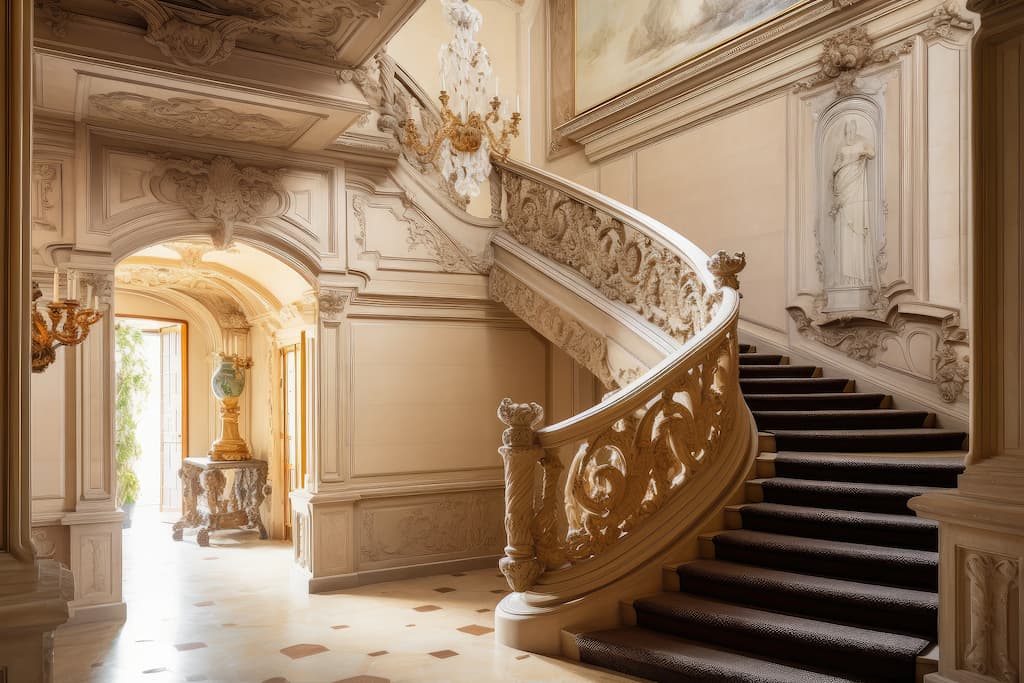
Double circulation systems separate public and private movement. Main stairs for formal use, service stairs and corridors for staff, family, and daily movement. This pattern, common in great historic estates, proves its value when family dynamics shift – multi-generational living, live-in caregivers, hospitality uses.
Room connections designed with multiple entry points. Instead of the single-loaded corridor with rooms accessed only from the hallway, I create interlocking spaces where movement can flow through rooms or bypass them via corridors. This flexibility becomes crucial when uses change.
Exterior access from major rooms. French doors, terraces, loggias – these connections to landscape extend living space and provide alternative circulation routes. They also create natural light penetration and ventilation patterns that mechanical systems can’t replicate.
Systems Integration for Century-Scale Maintenance
Here’s where most architects fail the longevity test. They design beautiful spaces and then let engineers jam mechanical systems wherever they fit. In a 100-year estate, every major system needs three things: accessibility, adaptability, and replaceability.
HVAC Design for Equipment Evolution
Mechanical equipment will be replaced four to six times over a century. Your ductwork and piping probably won’t be. This simple reality drives how I design HVAC integration.
Dedicated mechanical rooms with overhead clearance for equipment removal. I dimension these spaces for equipment 25% larger than current requirements. Technology improves, but physics doesn’t – you’ll always need space for air handlers, pumps, and distribution equipment.
Ductwork and piping distributed through dedicated, accessible chases. Never embedded in concrete or trapped behind finished walls. I detail access panels at regular intervals – not hidden panels that “blend in” but proper service doors that acknowledge the reality of maintenance.
Radiant heating systems embedded in floors but fed by easily accessible manifolds. The thermal mass lasts forever. The mechanical equipment and controls get updated every 20 to 30 years. Design for that reality.
Electrical and Data Infrastructure
Oversize all conduit by one size. Today’s electrical code might require 3/4-inch conduit for a circuit. I specify 1-inch. Why? Because in 30 years, someone will need to add conductors, and oversized conduit makes that possible without demolition.
Dedicated telecom/data rooms on every floor with conduit sleeves connecting them vertically. Whatever technology replaces fiber optics and Cat-6 will still need physical pathways through the building. Create those pathways as building infrastructure, not as afterthoughts.
Lighting systems designed with easily accessible junction boxes and circuit flexibility. I avoid the trend of hiding all electrical infrastructure. Future changes require access – provide it gracefully.
Plumbing Systems Built for Maintenance
All supply and waste lines accessible from below or through service corridors. This seems obvious but gets ignored constantly. When a drain line fails at 2 AM, you want access through a service space, not through your plaster ceiling.
Water-resistant assemblies in all wet areas, designed as replaceable systems. Waterproofing membranes fail. Tile grout requires maintenance. Detail these assemblies so they can be disassembled and rebuilt without affecting structure or adjacent finished spaces.
Plumbing fixtures specified with widely available connection standards. Custom fixtures are fine for aesthetics – but make sure the rough-in follows industry standards so replacements don’t require wall demolition.
The Real Cost of Building for Generations
Let’s address what you’re thinking. This approach costs more upfront – usually 18% to 25% more than standard luxury construction. But here’s what that premium actually buys.
Over 100 years, a properly designed estate eliminates three roof replacements at $400,000 each. It avoids two complete exterior renovations at $800,000 each. It reduces major mechanical replacements from six cycles to three.
I’ve analyzed the lifecycle costs. The premium you pay during construction gets recovered within 35 to 40 years through reduced maintenance. Everything after that is pure return – a home that appreciates with age.
But the real value isn’t financial. It’s knowing that the decisions you make today will serve your family 70 years from now. It’s creating something significant enough to anchor multiple generations. It’s building a legacy instead of just a house.
Design Details That Define Century Estates
The difference between a home that lasts and one that fails comes down to how you handle the details that nobody sees.
Wall assemblies with drainage planes and capillary breaks. Water management isn’t glamorous, but it determines whether your walls last 30 years or 150 years. I detail every exterior wall with multiple strategies for managing moisture – drainage planes behind cladding, capillary breaks at material transitions, weep systems at critical locations.
Foundation waterproofing systems designed for replacement. Even the best waterproofing eventually fails. I detail foundation walls with drainage composites that can be exposed and reapplied without excavating the entire perimeter – a $50,000 project instead of a $400,000 disaster.
Expansion joints at rational intervals. Buildings move. Materials expand and contract. Fighting this reality creates cracks and failures. Accommodating it through properly detailed expansion joints creates surfaces that age gracefully instead of catastrophically.
Flashing systems that shed water positively. Every material transition needs flashing. Every window and door needs flashing. Every roof penetration needs flashing. And not just any flashing – continuous, properly lapped, mechanically fastened copper or stainless steel that will outlast the building.
Structural connections designed for inspection. Steel connections, timber connections, masonry ties – these critical elements should be accessible for periodic inspection. I detail them with removable panels or strategically located access points. Structural failure is unacceptable in a century estate.
Site Planning for Long-Term Stewardship
The building itself is only part of the equation. Site design determines how well your estate functions across generations.
Stormwater management designed for climate uncertainty. I size all drainage systems for 150% of current 100-year storm calculations. Your site’s ability to handle water will determine whether your foundation remains stable for a century.
Landscape design with mature-scale planning. The trees you plant today reach maturity in 40 to 60 years. I locate them anticipating their full-grown dimensions, ensuring they enhance the architecture instead of overwhelming it or damaging foundations.
Utility infrastructure with upgrade capacity. Electrical service, water service, site drainage – every utility system gets designed with expansion capacity. Future generations will need more power, more data, more water. Anticipate that now.
Hardscape materials that match the building’s permanence. Stone terraces, not pavers. Stone walls, not veneers. These elements frame your estate – they should last as long as the buildings.
Why This Approach Requires the Right Architect
Most architects don’t think in century timescales. Their training emphasizes innovation and expression, not longevity and maintenance. That’s fine for houses. But estates require different expertise.
You need someone who understands material science, who knows which assemblies have proven themselves over centuries and which are experiments. Someone who can balance aesthetic ambition with practical durability.
You need an architect who’s designed enough high-end residential projects to understand lifecycle expenses, maintenance requirements, and replacement cycles. Someone who can explain why spending an extra $200 per square foot on materials today saves $400 per square foot over 75 years.
You need someone who designs for clients they’ll never meet – your grandchildren who’ll inherit the estate.
Moving Forward with Generational Design
Building a 100-year luxury estate starts with accepting that this is a different type of project. You’re not creating a showcase for this decade’s design trends. You’re creating infrastructure for multiple generations of family life.
That requires patience during design. It requires careful material research. It requires questioning every decision through the lens of longevity. And yes, it requires investment beyond typical luxury construction budgets.
The families I work with understand this. They’re building estates in the Hamptons, in Montana, in the Caribbean – properties they intend to hold for generations. They accept that true luxury isn’t about the newest materials or the trendiest layouts. It’s about quality that persists, spaces that adapt, and details that endure.
If you’re considering a luxury estate and thinking in generational terms, the conversation starts with one question: are you building for the next 30 years, or the next 100? Because the answer changes everything – from site selection to material specifications to how we detail every connection and transition.
Frequently Asked Questions: 100-Year Luxury Estate Design
What is 100-year luxury estate design?
100-year luxury estate design refers to architectural approaches that emphasize materials, structural systems, and spatial planning engineered to last generations with timeless aesthetics and enduring performance.
Which materials are best for long-lasting luxury homes?
Materials such as high-grade stone, sustainably sourced hardwoods, metal weathering alloys, and engineered systems designed for durability are often selected to ensure longevity and minimal lifecycle replacement.
How does layout impact the longevity of a luxury estate?
Thoughtful layouts that prioritize future adaptability, functional space flow, and clear circulation patterns help estates remain relevant as household needs evolve — minimizing obsolescence over time.
Why are timeless design principles important in luxury estates?
Timeless design principles — like balanced proportions, quality craftsmanship, and classic detailing — ensure that homes feel relevant across decades and avoid becoming dated as trends change.
Can luxury estate design support sustainability goals?
Yes. Integrating durable materials with passive environmental strategies (such as daylight optimization and thermal performance) supports both longevity and reduced lifetime environmental impact.
How can a homeowner plan for future generations when designing an estate?
Planning includes designing flexible spaces, selecting low-maintenance materials, projecting how living needs may change, and ensuring systems are serviceable long term.