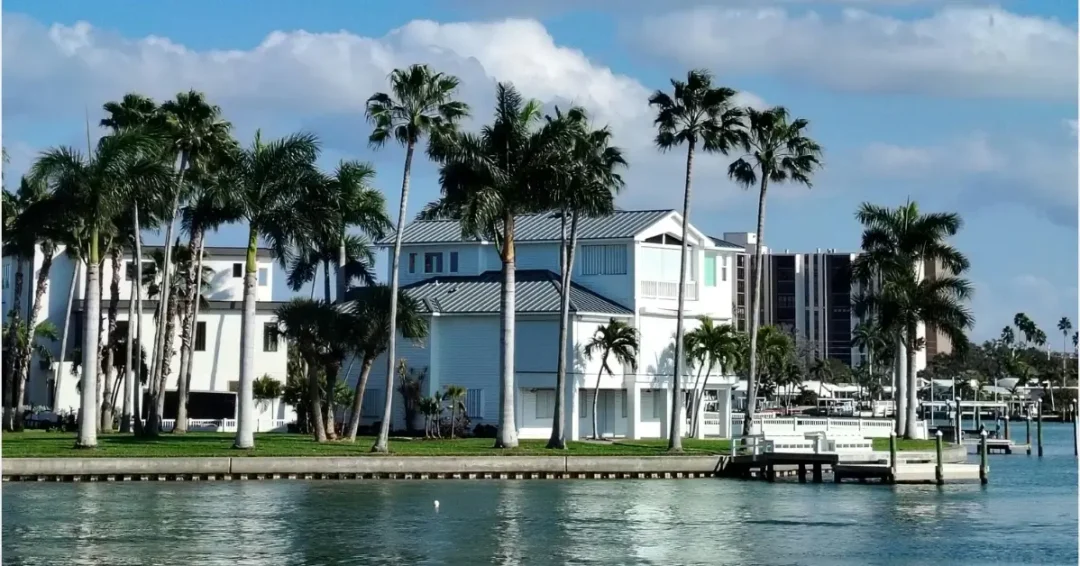
Most waterfront homes treat the dock as an afterthought – a utilitarian structure built to meet marina standards without considering how residents actually move between water and home.
The boat sits at a dock 200 feet from the house. You carry groceries, fishing gear, or diving equipment along an exposed boardwalk in summer heat or winter weather.
Boat-focused waterfront home design inverts this hierarchy. The water becomes your primary arrival point, not a recreational amenity you visit occasionally. You’re designing for people who use their boats as frequently as their cars – sometimes more frequently.
I’ve spent two decades designing waterfront properties where boat access isn’t about weekend leisure. It’s about daily patterns where residents arrive home by boat, where marine equipment needs storage as accessible as a garage.
The transition from water to house needs the same architectural consideration as a front entry in boat-focused waterfront home design.
Here’s how boat-focused waterfront home design actually works – the dock planning, boat lift integration, and water-to-home circulation that supports living on the water rather than just near it.
Essential Elements of Boat-Focused Waterfront Home Design
-
- Docks configured for daily use, not weekend recreation
-
- Boat lift integration with utility infrastructure
-
- Covered walkways providing weather protection
-
- Marine entry with wet storage and equipment access
-
- Direct circulation from dock to kitchen and living areas
Site Selection for Boat-Focused Waterfront Home Design
Boat-focused waterfront home design starts with understanding water conditions that affect dock construction and boat operations. Not all waterfront properties work equally well for serious boaters.
Water depth at your shoreline determines what you can build. Most residential boat lifts require 4-6 feet of water depth at mean low tide. Larger vessels need 6-8 feet.
If your shoreline is shallow with gradual drop-off, you’ll need longer docks or dredging permits to reach adequate depth.
Bottom conditions matter intensely. Rocky or coral bottoms make pile driving difficult and expensive. Soft mud bottoms require longer piles or alternative foundation systems.
The ideal bottom is firm sand or clay that provides stable pile support without excessive driving resistance.
Wave action and current affect dock stability and boat handling. Properties in protected coves or canals offer calm water that makes docking easier and reduces dock maintenance. Properties facing open water require more substantial dock construction and more skilled boat handling.
Wind exposure determines how difficult it is to dock your boat safely. Prevailing winds that blow perpendicular to your dock make docking challenging. Properties where prevailing winds blow parallel to or away from the dock offer better operational conditions.
| Site Condition | Requirement | Impact on Design |
|---|---|---|
| Water Depth (30′ boat) | 5-6 feet at low tide | Determines minimum dock length |
| Dock Width | 5-6 feet minimum, 8 feet at slip | Allows equipment transport |
| Bottom Type (ideal) | Firm sand or clay | Stable pile support, lower cost |
| Wave Protection | Protected cove or canal | Easier docking, less maintenance |
Dock Configuration and Layout in Boat-Focused Waterfront Home Design
Boat-focused waterfront home design requires docks configured for efficiency rather than appearance. You’re not creating a scenic boardwalk – you’re building functional marine infrastructure that happens to serve a residence.
Dock Length and Water Depth
Dock length gets determined by water depth requirements and vessel size. For a 30-foot boat, you need the dock extending to water deep enough for your boat lift (typically 5-6 feet at low tide), plus clearance for the boat itself.
In areas with gradual depth change, this might mean a 60-80 foot dock to reach adequate water. In locations with steep drop-off, a 20-30 foot dock provides the same functionality.
Dock width matters for moving gear and equipment. A 4-foot-wide dock is code-compliant but inadequate for carrying marine equipment, coolers, or fishing gear.
I specify 5-6 foot minimum widths for primary docks, with 8-foot-wide areas at the boat slip for loading and maneuvering.
Boat Lift Selection and Integration
Boat lifts protect your vessel from marine growth, storm surge, and hull damage while providing quick launch capability. The lift type depends on vessel size, water conditions, and site constraints.
Four-post lifts are standard for boats up to 30 feet and 15,000 pounds. These provide stable support and relatively simple installation. The lift structure becomes a permanent dock element that affects sight lines and circulation.
Boat-focused waterfront home design integrates lift structures into the overall dock layout rather than treating them as add-ons. The lift location determines where utilities (power, water) need to run, where storage makes sense, and how you move from boat to dock.
I position lifts to minimize their visual impact from the house while maintaining convenient access. This often means placing the lift perpendicular to the shoreline rather than parallel, which creates a T-shaped dock configuration.
Multiple Vessel Accommodation
Many waterfront homeowners maintain multiple vessels – a larger boat for offshore use, a smaller boat or jet skis for quick trips, possibly kayaks or paddleboards.
Boat-focused waterfront home design needs to accommodate this fleet without creating dock congestion.
I typically design with the primary vessel on a lift at the dock terminus, smaller vessels on side-mounted lifts or floating docks, and non-motorized craft on dedicated storage racks near shore. This creates a hierarchy where the most-used vessel has the most convenient access.
Our portfolio of waterfront residential projects includes several examples of multi-vessel dock configurations that maintain architectural coherence while supporting serious boating lifestyles.
5-6′
Minimum Dock Width
(Primary Circulation)
6-9′
Covered Walkway Height
(Weather Protection)
$125K-$250K
Total Cost Premium
(vs Standard Waterfront)
Water-to-Home Circulation in Boat-Focused Waterfront Home Design
The critical planning element in boat-focused waterfront home design is the path from your boat to your home. This isn’t a scenic garden walk – it’s a functional circulation route that needs to work when you’re carrying equipment, groceries, or fishing gear.
Covered Walkways and Weather Protection
The dock-to-house connection needs weather protection. In warm climates, shade makes the walk tolerable during midday heat. In northern locations, covering prevents ice formation and provides shelter during rain or snow.
I design covered walkways that are substantial architectural elements rather than simple roof structures. These need to complement the home’s design language while providing functional protection.
Width should allow two people to pass comfortably – 6 feet minimum.
The covering height matters for clearance and ventilation. Too low and it feels oppressive. Too high and it provides inadequate weather protection. I typically use 8-9 feet for covered walkway heights.
Marine Entry Sequence
Boat-focused waterfront home design requires a dedicated marine entry – essentially a second front door optimized for arriving from the water rather than by car.
This entry needs direct access to key areas. Wet storage for marine gear and life jackets. A utility sink for rinsing equipment.
Direct access to outdoor showers for rinsing off salt water before entering the main house.
The marine entry should connect to the kitchen for unloading groceries or the day’s catch, to storage areas for boating equipment, and to family living spaces without requiring passage through formal areas.
Flooring needs to handle wet conditions and sandy feet. I specify tile, sealed concrete, or marine-grade composite materials that won’t be damaged by salt water and can be easily cleaned.
Utility Infrastructure for Boat-Focused Waterfront Home Design
Boat-focused waterfront home design requires utility infrastructure that supports marine activities – not just the house itself.
Power Distribution to Docks
Docks need substantial electrical service. Boat lifts require 220V service with adequate amperage for lift motors. Shore power for boats requires dedicated circuits. Lighting for nighttime operations adds to the load.
I typically design for 100-200 amp service to the dock depending on the number and size of lifts. This requires trenching from the house or running underwater conduit, plus marine-rated electrical panels and outlets at the dock.
The electrical installation needs to meet marine codes which are more stringent than residential standards. All components must be rated for wet locations and salt water exposure.
For comprehensive marine electrical systems and shore power solutions, the planning must happen during architectural design to coordinate with dock construction and home electrical service.
Water and Fuel Service
Docks need fresh water for boat washing, fish cleaning, and general maintenance. I run dedicated water lines to the dock with marine-rated fixtures and backflow prevention to protect the home’s water supply.
Some boat-focused waterfront home design projects include fuel storage – either for gasoline or diesel. This requires specialized tanks, proper venting, spill containment, and compliance with environmental regulations.
Sewage Pump-Out Systems
Properties where boats remain docked for extended periods may need sewage pump-out capabilities to meet environmental regulations. This requires underground storage tanks, pump systems, and disposal arrangements with local utilities.
Storage Integration for Marine Equipment
Boat-focused waterfront home design requires substantial storage for marine equipment, fishing gear, water sports equipment, life jackets, dock lines, fenders, and maintenance supplies.
I design dedicated marine storage rooms with direct access from the dock. These spaces need good ventilation to prevent mildew, adequate lighting, and organization systems for different equipment types.
Wet storage areas handle items that come in soaked with salt water – diving gear, fishing equipment, life jackets. These need drain floors, outdoor access for hosing equipment, and good air circulation.
Dry storage handles items that need to stay protected – electronics, tools, spare parts, seasonal equipment. Climate control isn’t always necessary, but protection from humidity and temperature extremes matters.
Boat-Focused Waterfront Home Design Planning Checklist
-
- Water depth adequate for boat lift (5-6 feet minimum at low tide)
-
- Dock width 5-6 feet for equipment transport
-
- Covered walkway 6 feet wide, 8-9 feet high
-
- Marine entry with wet storage and outdoor shower access
-
- Electrical service 100-200 amps to dock
-
- Fresh water line with backflow prevention
-
- Dedicated marine equipment storage (wet and dry)
Outdoor Living Spaces Oriented to Water
Boat-focused waterfront home design treats outdoor living spaces as part of the dock-to-home circulation rather than separate recreational areas.
I typically design outdoor living areas at the shoreline where they serve as transition zones between water activities and home interior. These spaces need to accommodate wet beachgoers, provide shade, and offer views of docked boats.
Outdoor showers become essential infrastructure rather than luxury amenities. Position them near the marine entry where they’re convenient after water activities.
Outdoor kitchens make sense when families regularly cook their catch or entertain guests who arrive by boat.
Hurricane and Storm Protection in Boat-Focused Waterfront Home Design
Boat-focused waterfront home design in hurricane-prone regions requires planning for storm preparation. The easier you make this process, the more likely it gets done properly.
Boats need to be either trailered away from the water or secured with proper mooring systems that can withstand storm surge and wind. Dock design should consider how you’ll remove loose items, secure boats, and protect lift systems.
I design with storage areas where dock furniture, equipment, and removable components can be quickly secured. The marine entry becomes a staging area for storm preparation activities.
Some properties include storm shutters or impact-resistant glass for areas facing the water. The covered walkway may need removable panels that protect against storm surge while allowing normal ventilation during calm weather.
Regulatory and Permitting Considerations
Boat-focused waterfront home design faces more regulatory oversight than standard residential projects. Dock construction requires permits from multiple agencies – local building departments, environmental agencies, Army Corps of Engineers in some jurisdictions.
Setback requirements, dock length restrictions, and environmental protection rules vary by location. Properties in designated manatee zones have additional requirements. Areas with seagrass beds face construction restrictions.
The permitting process typically takes 6-12 months and may require environmental studies, neighbor notifications, and public hearings. This needs to happen early in the project timeline, ideally before home design begins, because dock restrictions may affect house placement.
| Component | Cost Range | Key Elements |
|---|---|---|
| Dock + Boat Lift | $40,000-$80,000 | Pilings, decking, lift structure, installation |
| Covered Walkway | $25,000-$50,000 | Structure, roofing, architectural integration |
| Marine Entry Improvements | $30,000-$60,000 | Wet storage, outdoor shower, utility sink, flooring |
| Electrical Service to Dock | $15,000-$30,000 | Trenching, panels, marine-rated outlets, lighting |
| Water & Sewage Systems | $10,000-$25,000 | Water lines, backflow prevention, pump-out systems |
Cost Implications for Boat-Focused Waterfront Home Design
Boat-focused waterfront home design costs significantly more than standard waterfront construction because of the marine infrastructure requirements.
A basic dock with boat lift runs $40,000-80,000 depending on length, water depth, and bottom conditions. Covered walkways add $25,000-50,000. Marine entry improvements with wet storage, outdoor shower, and utility infrastructure add $30,000-60,000.
Electrical service to docks including trenching, marine panels, and fixtures costs $15,000-30,000. Water service and sewage systems add $10,000-25,000.
The total premium for boat-focused waterfront home design compared to standard waterfront construction typically runs $125,000-250,000 depending on dock complexity, number of boat lifts, and utility requirements.
Working with Your Architect on Boat-Focused Waterfront Home Design
If you’re planning boat-focused waterfront home design, discuss your boating patterns during initial programming. What size vessels do you own? How often do you use them? Do you arrive home by boat regularly or occasionally?
These patterns determine whether you need a simple dock or a comprehensive marine facility. They affect house placement, room adjacencies, and circulation planning.
Be clear about your timeline expectations. Waterfront permitting takes longer than standard residential work, and dock construction may need to happen during specific seasonal windows when environmental impacts are minimized.
Understand that boat-focused waterfront home design requires coordination with marine contractors, electrical specialists, and environmental consultants – not just the typical residential construction team.
When you’re ready to discuss waterfront residential design, the conversation needs to include your boating requirements from the beginning.
Contact our team to discuss how boat-focused waterfront home design strategies can integrate marine access with architectural excellence for properties where the water is more than scenery – it’s your driveway.
Ready to Design Your Waterfront Home for Serious Boating?
Discover how Ralston Architects creates boat-focused waterfront home design that integrates docks, lifts, and marine entries into cohesive residential architecture.
View our waterfront projects or schedule a consultation to discuss your marine access requirements.
Waterfront Home Design FAQs
Boat-focused waterfront home design typically adds $125,000-$250,000 to standard waterfront construction costs. This breaks down to approximately $40,000-$80,000 for a basic dock with boat lift, $25,000-$50,000 for covered walkways, $30,000-$60,000 for marine entry improvements (wet storage, outdoor shower, utility infrastructure), $15,000-$30,000 for electrical service to the dock, and $10,000-$25,000 for water service and sewage systems. The final cost depends on dock complexity, number of boat lifts, water depth at your shoreline, bottom conditions, and specific utility requirements.
Most residential boat lifts require 4-6 feet of water depth at mean low tide for boats up to 30 feet. Larger vessels need 6-8 feet of depth. If your shoreline has gradual depth change with shallow water, you’ll need a longer dock (potentially 60-80 feet) to reach adequate depth for the boat lift. Properties with steep drop-off can achieve the same functionality with a shorter 20-30 foot dock. Water depth directly determines your dock length and construction costs, making it one of the most critical site selection factors for boat-focused waterfront home design.
The permitting process for dock construction typically takes 6-12 months and involves multiple agencies including local building departments, environmental agencies, and potentially the Army Corps of Engineers depending on your location. Properties in designated manatee zones, areas with seagrass beds, or environmentally sensitive regions face additional requirements and restrictions. You may need environmental studies, neighbor notifications, and public hearings. This permitting timeline needs to happen early in your project—ideally before home design begins—because dock restrictions and setback requirements may affect where you can position the house itself.
A 4-foot-wide dock meets building codes but is inadequate for practical use when carrying marine equipment, coolers, fishing gear, or groceries from your boat. We recommend 5-6 foot minimum widths for primary dock circulation, with 8-foot-wide areas at the boat slip for comfortable loading, unloading, and maneuvering around equipment. The covered walkway connecting dock to house should be at least 6 feet wide to allow two people to pass comfortably. These wider dimensions transform your dock from a minimal compliance structure into functional infrastructure that supports daily boat use rather than occasional recreation.
Yes, if you’re using your boat as frequently as your car for arrivals and departures. A dedicated marine entry functions as a second front door optimized for arriving from the water rather than by land. This entry needs wet storage for marine gear and life jackets, a utility sink for rinsing equipment, and direct access to outdoor showers for rinsing off salt water. It should connect directly to the kitchen (for unloading groceries or your catch), storage areas for boating equipment, and family living spaces without requiring passage through formal rooms. Flooring must handle wet conditions—specify tile, sealed concrete, or marine-grade composite materials that won’t be damaged by salt water.