
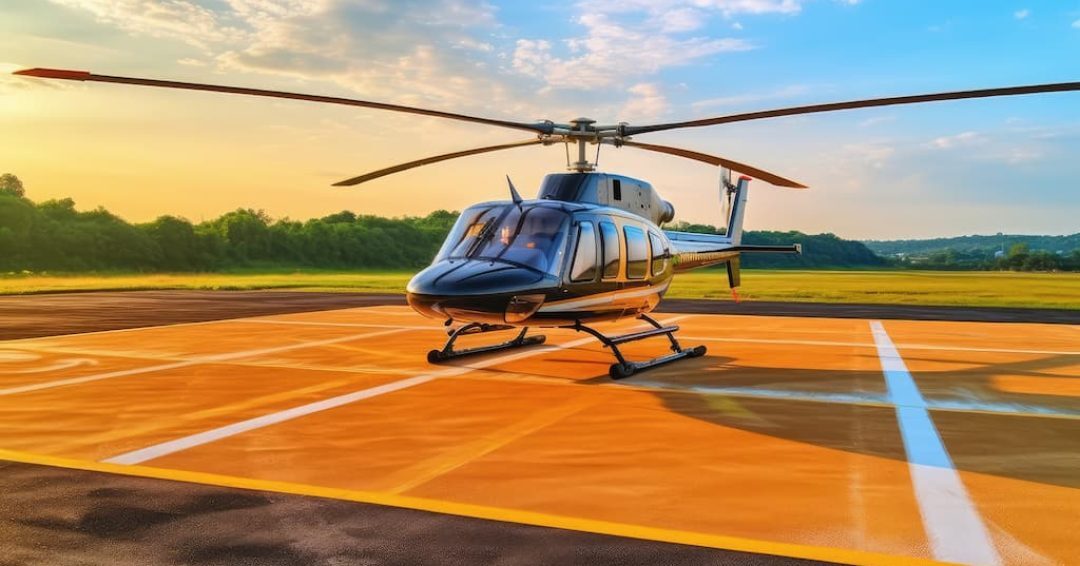
Most luxury homes are designed around a single access point: the driveway. Not all need helicopter, yacht, or aviation access.
But some properties need to accommodate multiple transportation modes simultaneously. Private helicopter arriving from the city. Yacht docking after a coastal cruise. Multiple vehicles coming and going. Each access type has its own requirements, regulations, and spatial demands. And when you need all three integrated into a single residential property, the architectural challenge becomes significantly more complex.
This is what helicopter yacht aviation home design actually addresses – not just adding a helipad or dock as afterthoughts, but creating residential architecture where air, water, and ground access work together as part of a coordinated system.
I’ve designed homes where clients arrive by helicopter from their primary residence, keep a yacht docked steps from the house, and maintain a fleet of vehicles on-site. These aren’t separate features added to a standard home. They’re integrated elements that shape the site planning, influence the architectural organization, and require specialized knowledge of aviation regulations, maritime requirements, and security protocols.
The challenge isn’t whether these access modes can coexist on a single property. They can. Properties exist right now with functioning helicopter access, private docks, and comprehensive vehicle facilities. The challenge is integrating them properly – understanding the clearances, the regulations, the circulation patterns, and the operational requirements that make multi-modal access work without conflict.
Most architects never encounter this. Residential projects with helicopter access are rare. Projects with both helicopter and yacht access are rarer still. When you add multiple vehicle requirements and security considerations, you’re working in a specialized area where standard residential design approaches don’t apply.
Here’s what makes this complex: each access type has its own regulatory framework. The FAA governs helicopter operations. Coastal authorities control dock permits. Local codes dictate vehicle access and parking. These regulatory systems don’t naturally coordinate with each other. Making them work together on a single residential property requires understanding all three frameworks and designing solutions that satisfy multiple jurisdictions simultaneously.
And beyond regulations, there are practical operational challenges. Helicopter downdraft affects landscaping and outdoor living spaces. Yacht access requires specific water depths and approach angles. Vehicle circulation needs clear patterns that don’t conflict with pedestrian movement or aviation clearances. Security protocols for one access type can complicate operations for another.
The homes that successfully integrate multiple transportation modes do so because these challenges were addressed during design – not discovered during construction or after occupancy. The architecture, the site planning, the regulatory coordination, and the operational planning all work together from the beginning.
Let me show you how this actually works. Not theory, but the practical realities of designing residential properties where helicopter, yacht, and vehicle access function as an integrated system.
Why Adding Multi-Modal Access Isn’t Simple
Here’s the misconception: clients assume that if they have enough land, adding a helipad is just a matter of pouring some concrete. Adding a dock for a yacht means building a pier. Accommodating vehicles means making the garage bigger.
This oversimplification is where projects run into trouble.
A helipad isn’t just a concrete pad. It’s a regulated aviation facility that requires FAA approval, specific dimensional requirements, approach and departure clearances, lighting systems for night operations, and coordination with local aviation authorities. The pad itself might be simple. The regulatory framework surrounding it is not.
Private yacht access isn’t just about having waterfront. It’s about water depth adequate for your vessel draft, protected mooring that handles weather conditions, permitting from multiple coastal authorities, environmental compliance for any construction in or near water, and understanding how tides and currents affect daily operations.
Vehicle access for luxury properties goes beyond residential garages. When you’re accommodating multiple high-value vehicles, daily-use cars, service vehicles, and potentially staff vehicles, you need circulation systems that prevent conflicts, security that protects assets, and staging areas that don’t compromise the residential character of the property.
Now combine all three on a single property, and the complexity compounds. The helipad needs clear approach paths that don’t conflict with dock structures. Yacht access requires water frontage that might occupy premium property where vehicle access would otherwise go. Vehicle circulation needs to avoid aviation clearances and provide service access to both land and water facilities.
I see two common approaches that fail:
The first is treating each access type as an independent addition. Design the house, then add a helipad somewhere on the property. Add a dock at the waterfront. Expand the garage. This creates three separate systems that don’t coordinate with each other operationally. You end up with a helipad that affects outdoor living spaces with downdraft. A dock location that complicates vehicle access to the house. Vehicle circulation that conflicts with helicopter approach paths.
The second failing approach is prioritizing one access type and compromising the others. I’ve seen properties where the helipad got prime positioning, leaving the dock in a location with inadequate water depth. Or where yacht access dominated the waterfront, forcing helicopter access to a location with marginal clearances. Or where vehicle circulation took precedence, leaving both aviation and maritime access as afterthoughts.
Homes designed for helicopter and yacht access require integrated planning where all three transportation modes inform the site organization from the beginning. Not sequentially – where you design for one, then accommodate the others. Simultaneously – where the relationship between all access points shapes the overall design approach.
This changes fundamental aspects of site planning. Property orientation becomes about more than views and solar exposure. It’s about approach paths, clearance zones, and operational sequences. Building placement isn’t just about optimal positioning on the lot. It’s about creating zones for different access types that don’t conflict.
Landscape design becomes functional rather than purely aesthetic. Trees and vegetation can’t be placed wherever they look best. They need to respect aviation clearances, avoid obstructing water access, and work within security sight lines. Every plant has operational implications.
Even the architectural design of the house itself gets influenced by multi-modal access requirements. Where you position entries matters – you might need separate arrival sequences for helicopter, yacht, and vehicle access. How you organize interior spaces affects circulation from different access points. Window placement and outdoor living areas need to account for helicopter operations and security protocols.
The properties that work are the ones where multi-modal access shaped the design from the initial site analysis. Where the architect understood aviation regulations, maritime requirements, and luxury vehicle accommodation – and designed a coordinated system rather than three separate additions.
Helicopter Access and Helipad Design
Let me start with aviation access because it’s typically the most regulated and constraining element of multi-modal residential design.
FAA Requirements and Dimensional Standards
Private helipads fall under FAA regulation, though the specific requirements vary based on whether you’re seeking official designation or operating under less formal arrangements. Either way, basic safety standards apply.
The landing area itself needs minimum dimensions based on the helicopter’s rotor diameter. For most private helicopters – machines in the 40 to 50-foot rotor diameter range – you need a touchdown and liftoff (TLOF) area of at least 1.5 times the rotor diameter. That means a 75-foot diameter pad minimum.
But the pad itself is just the center of a larger requirement. The safety area surrounding the pad needs to extend 0.5 times the rotor diameter beyond the TLOF. So you’re actually looking at a total clear area approaching 100 feet in diameter for typical private helicopter operations.
This area can’t have obstacles that would interfere with rotor clearance – no trees, structures, poles, or equipment within the safety zone. The surface doesn’t all need to be paved, but it needs to be clear of anything that could be picked up by rotor wash or present a hazard.
Helicopter Approach and Departure Paths
A helipad isn’t useful unless helicopters can safely approach and depart. This requires clear airspace on at least one side, preferably two opposite sides for flexibility with wind conditions.
The approach/departure path needs to be obstacle-free at a slope ratio of approximately 8:1 – meaning for every 8 feet of horizontal distance, you can gain or lose 1 foot of elevation. This creates a wedge of protected airspace extending from the pad.
On residential properties, this often means positioning the helipad where natural topography or property boundaries provide the necessary clearances. A helipad at the edge of a property facing open water, agricultural land, or other non-developed areas can achieve clearances that would be impossible in the center of a developed neighborhood.
Wind direction affects operations significantly. Helicopters prefer to take off and land into the wind when possible. If your primary approach path aligns with prevailing winds, operations are simpler. If it doesn’t, you might need to accommodate approaches from multiple directions, which increases the clearance requirements.
Helipad Surface Specifications and Markings
The helipad surface itself needs to support the helicopter’s landing gear loads. For typical private helicopters, this means a reinforced concrete pad 6 to 8 inches thick, properly engineered for point loads.
The surface must be level or nearly level – slopes greater than 2% make helicopter operations challenging. Drainage is critical because standing water creates hazards during landing and takeoff. The pad should slope slightly for drainage but not enough to affect aircraft stability.
For official helipad designation, you need specific markings: a center circle with the letter H, perimeter markings showing the landing area boundary, and potentially wind indicators. Even informal private pads benefit from clear visual references for pilots.
Lighting becomes mandatory for night operations. At minimum, you need perimeter lighting defining the pad boundaries. For frequent night use, proper aviation lighting systems with backup power are standard. These lights need to be flush-mounted or otherwise positioned to avoid becoming obstacles themselves.
Helipad Operational Considerations
Beyond regulatory requirements, several practical factors affect how well helicopter access integrates with residential use:
- Noise impact – helicopter operations generate 90 to 100+ decibels at close range. This affects where you position outdoor living spaces, pools, and entertainment areas relative to the helipad. It also affects neighbors, which can become a zoning or community relations issue.
- Rotor wash effects – the downdraft from rotor blades creates significant wind force, especially during landing and takeoff. Landscaping within 100 feet needs to account for this. Loose objects become projectiles. Outdoor furniture needs to be secured or stored.
- Fuel storage – if you’re operating helicopters regularly from the property, fuel storage becomes a consideration. Aviation fuel (Jet A) requires specific storage tanks, pumps, and safety measures. This adds another regulated element to the site.
- Hangar or cover – helicopters left exposed to weather deteriorate faster and require more maintenance. Properties with regular aviation use often include hangar structures or at least weather protection, which adds building area and affects site planning.
Integration of Helipad with with Site Design
The helipad location should balance several factors:
- Clearances to structures – maintain adequate distance from the house and other buildings, both for safety and to minimize noise/vibration impacts on living spaces.
- Access to the house – passengers arriving by helicopter need a reasonable path to the main residence without excessive walking distance or exposure to weather.
- Security protocols – helicopter arrivals need to integrate with overall property security, including visual monitoring and controlled access from the landing area to the house.
- Visual impact – from the house and outdoor living areas, the helipad should either be screened or positioned where it doesn’t dominate views. Concrete pads aren’t particularly attractive landscape features.
Some properties solve this by positioning helipads at a distance from the main house – 200 to 300 feet away or more – connected by paths or even short vehicle transport. This minimizes operational impacts on daily living but requires more land and additional infrastructure for passenger transport from pad to residence.
Other properties integrate the helipad closer to the house – within 100 to 150 feet – accepting the operational impacts in exchange for convenience. This works better when helicopter use is infrequent or when outdoor living areas can be positioned away from the aviation zone.
Yacht and Marina Access
Water access presents a different set of technical and regulatory challenges. While aviation regulations are federal, maritime access gets controlled at federal, state, and local levels simultaneously.
Water Depth and Approach Analysis for Yacht
The first question for any yacht-accessible property is whether the water is deep enough. This sounds basic, but it’s the limiting factor for many waterfront properties.
Yacht draft – the depth the vessel extends below the waterline – varies enormously. A 40-foot sport yacht might draw 4 to 5 feet. A 70-foot motor yacht could draw 6 to 8 feet. Sailing vessels often draw more than comparable length motor yachts. You need to know your vessel’s draft before assessing whether a property can accommodate it.
But draft alone isn’t enough. You need adequate depth at low tide with a safety margin – typically 2 feet minimum between the keel and bottom. If your yacht draws 6 feet, you need 8 feet of depth at mean low water. In areas with significant tidal ranges, this can be challenging.
The approach to the dock matters as much as the dock location itself. A property might have adequate depth at the shoreline but shallow water in the approach path. Channels need to be deep enough and wide enough for safe maneuvering. Obstructions – rocks, sandbars, shallow areas – can make an otherwise suitable location unusable.
Current and wave conditions affect operations. Strong currents make docking difficult and require more substantial dock structures. Properties in exposed locations need wave protection – either natural protection from geography or constructed breakwaters. Calm water looks attractive but might be unsuitable if regular yacht operations are the goal.
Dock Design and Permitting for Yacht Access
Building any structure in or over water requires permits from multiple authorities – typically the Army Corps of Engineers at the federal level, state environmental agencies, and local waterway management authorities. Each jurisdiction has different requirements and timelines.
The permit process for private docks typically takes 6 to 18 months. You need engineering drawings, environmental impact assessments, and often public notice periods where neighbors can object. In environmentally sensitive areas or locations with complex jurisdictional boundaries, permits can take longer or be denied entirely.
Dock design needs to account for:
- Fixed vs. floating structures – fixed piers work in areas with minimal tidal range but become problematic where water levels vary significantly. Floating docks accommodate tidal changes but require more engineering for wind and current loads.
- Vessel size and weight – larger yachts create substantial loads during docking, especially in wind or current. The dock structure needs adequate strength and proper fendering to protect both the dock and the vessel.
- Utility connections – power and water connections to the dock allow the yacht to operate on shore power rather than running generators. This requires electrical systems rated for marine use and freshwater lines that won’t freeze in cold climates.
- Fuel considerations – some properties include fuel systems at the dock, though this substantially complicates permitting due to environmental regulations around fuel storage near water.
Shoreline Improvements for Yacht Access
Beyond the dock itself, yacht access often requires shoreline work – seawalls, riprap, grading, or access paths. All of these trigger additional permitting.
Seawalls provide erosion control and can create the vertical face needed for efficient dock placement. But they’re expensive – $500 to $1,500 per linear foot depending on height and construction method – and require engineering and extensive permitting.
Natural shorelines often need stabilization if they’re going to support regular yacht operations. Rip-rap (large rock) revetments are common in areas where hard seawalls aren’t permitted or desired. These work with natural topography while providing erosion protection.
Access from the house to the dock needs careful planning. The path should be appropriate for the owners and guests in various weather conditions – not just a rough trail but proper walkway with lighting and potentially cover for part of the distance. The grade matters; steep slopes are difficult with luggage or supplies.
Yacht Maintenance and Storage Facilities
Properties with serious yacht operations often need support facilities beyond just the dock:
- Equipment storage – somewhere to keep dock lines, fenders, maintenance equipment, cleaning supplies, and seasonal items. This might be a separate structure near the shoreline or dedicated space in a larger building.
- Tender storage – many larger yachts carry a tender (small boat) for shore access. This needs its own storage location and potentially a launch system.
- Utility buildings – pump houses for water systems, electrical equipment for shore power, and potentially fuel management systems all need weather-protected housing.
- Crew facilities – larger yachts with professional crew may need separate crew access, facilities, and potentially housing that’s independent of the main residence.
Integration of Yacht Access with Overall Site Design
Yacht access integration creates several design challenges:
Property orientation: Waterfront becomes the dominant site feature, which often means the house orients toward water views. But this might conflict with optimal solar orientation, privacy from water traffic, or helicopter approach paths if aviation access is also required.
Circulation patterns: Guest arriving by yacht need a path to the main house. This path should be separate from service access and ideally doesn’t require walking through the main living areas to reach guest accommodations.
Security considerations: Water access is inherently less secure than land access. The property needs visual monitoring of the dock area and potentially controlled access from the dock to the house. In some locations, security concerns about water-based approach make yacht access complicated beyond just the physical design.
Service and delivery: Yachts generate service needs – provisioning, maintenance, crew changes, waste removal. Properties need to accommodate these activities without disrupting the residential character or creating circulation conflicts with other access modes.
Vehicle Access and Motor Courts
Vehicle access might seem straightforward compared to aviation and maritime requirements, but luxury properties with multi-modal transportation have vehicle needs that go well beyond typical residential design.
Multiple Vehicle Accommodation
Properties designed for helicopter and yacht access typically need to accommodate substantial vehicle counts:
- Owner’s vehicles – luxury properties often house collections of 4 to 12 vehicles ranging from daily drivers to collector cars.
- Guest vehicles – arriving guests may bring their own vehicles, requiring secure parking separate from the owner’s collection.
- Staff vehicles – property staff, household employees, and security personnel need parking that doesn’t interfere with owner and guest areas.
- Service vehicles – maintenance contractors, delivery vehicles, and service providers need temporary parking and staging areas.
This creates storage requirements that might total 15 to 25 vehicle spaces across different categories. Not all of these need to be in primary garages, but they all need appropriate locations.
Multiple Vehicle Garage Design and Organization
The primary garage for an aviation-ready residential design needs to function as more than car storage:
- Climate control – high-value vehicle collections benefit from temperature and humidity control, which means treating the garage as conditioned space rather than unconditioned storage.
- Security systems – separate security zones for vehicle storage, potentially with different access protocols than the main house.
- Maintenance capabilities – workspace for vehicle maintenance, detailing areas, and potentially lift systems for working underneath vehicles.
- Display considerations – some properties treat vehicle collections as displayable elements, with garage design that allows viewing from living spaces or presents vehicles as aesthetic features.
The garage location relative to the house affects daily operations. Direct connection to the house provides convenience and weather protection but requires careful design to prevent garage functions – noise, fumes, maintenance activities – from affecting living spaces. Detached garages separate these functions but reduce convenience.
Motor Court and Arrival Sequences
The motor court – the formal arrival area for vehicles – needs to accommodate multiple functions simultaneously:
Primary arrival: The space where owners and guests arrive and depart needs to feel appropriate for a luxury residence. This typically means a defined forecourt with landscaping, proper lighting, and sufficient area for multiple vehicles without crowding.
Vehicle staging: When hosting events or having multiple guests, you need space where vehicles can stage during arrival and departure without creating congestion. This might be 3,000 to 5,000 square feet of paved area beyond the primary arrival zone.
Service access: Deliveries, maintenance contractors, and service vehicles need access that’s separate from the primary arrival experience. Properties often have a secondary vehicle entry that leads to service areas, staff parking, and utility access.
Turnaround capability: Luxury properties benefit from motor courts that allow vehicles to turn around rather than backing out. The space required for this – approximately 60 to 75 feet in diameter for a full turnaround – often shapes the overall layout.
Helicopter, Yacht and Vehicle Circulation Planning
When you combine helicopter, yacht, and multiple vehicle access requirements, circulation planning becomes complex:
Vehicle routes need to be separate from pedestrian paths between the house and helicopter pad. Service vehicle circulation should avoid primary arrival areas. Staff access needs to be distinct from guest arrival. Emergency vehicle access – fire trucks, ambulances – requires different turning radii and clearances than typical luxury vehicles.
The property needs clear hierarchies: which routes are primary, which are service, which are occasional use. This affects paving choices, landscape treatment, and how visible each circulation path is from the main residence.
Security protocols often require control points where vehicles can be screened before entering the primary property. This might mean a security gate set back from the main entrance, creating a buffer zone between public road and private property.
Integrated Site Planning for Multi-Modal Access
Here’s where everything comes together. Properties with helicopter, yacht, and vehicle access can’t treat each as an independent system. They need integrated site planning where all three modes work together.
Zoning and Functional Areas
The site needs clear functional zones:
- Aviation zone – the helipad, clearances, and associated approach paths
- Maritime zone – the waterfront, dock facilities, and shoreline access
- Vehicle zone – motor courts, garages, parking areas, and circulation routes
- Residential zone – the house, outdoor living spaces, and immediate landscape
- Service zone – utilities, maintenance facilities, and staff areas
- Security zone – monitoring locations, controlled access points, and perimeter systems
These zones need to relate to each other logically. The aviation zone should position for clearances while maintaining reasonable access to the residential zone. The maritime zone typically occupies waterfront while allowing vehicle access for provisioning and maintenance. The vehicle zone needs to serve all other zones without creating conflicts.
Circulation Hierarchy
Movement patterns between zones need clear organization:
- Owner circulation – paths between residence and all arrival points (helicopter, yacht, vehicle) should be direct, weather-protected where practical, and appropriately scaled.
- Guest circulation – separate from service routes, with clear wayfinding and appropriate landscape treatment.
- Staff circulation – efficient access to all functional areas without requiring movement through primary guest spaces.
- Service circulation – delivery and maintenance vehicles need access to necessary areas without visibility from primary living spaces.
Security Integration
Multi-modal access creates multiple security concerns that need coordinated solutions:
Perimeter control: Properties with aviation and maritime access can’t rely on fences and gates alone. You need monitoring systems that cover air, water, and land approaches. This typically means camera systems, potentially radar for aviation monitoring, and water-based sensors for marine approaches.
Access control: Each arrival mode needs appropriate security protocols. Helicopter arrivals might require pre-clearance and identity verification. Yacht access needs monitoring of the dock area. Vehicle access typically uses gates with intercom systems and potentially credential verification.
Staff coordination: Security personnel need positions where they can monitor multiple zones simultaneously and respond to arrivals via any transportation mode. This affects where security buildings or monitoring stations get located.
Regulatory Coordination
Perhaps the most challenging aspect of multi-modal luxury residential architecture is coordinating multiple regulatory frameworks:
The FAA controls aviation operations. The Army Corps of Engineers, state environmental agencies, and local authorities control maritime facilities. Local zoning and building codes control vehicle access and structures. Each agency operates independently with different timelines, requirements, and approval processes.
Successful projects coordinate these approvals sequentially or in parallel, understanding which approvals are prerequisites for others and which can proceed simultaneously. This requires experience with regulatory processes and often benefits from consultants who specialize in aviation permitting, maritime permits, or both.
The timeline for regulatory approvals often determines the overall project schedule. If dock permits take 12 months and FAA helipad approval takes 8 months, the project timeline needs to accommodate both. Trying to compress regulatory timelines usually fails or creates compliance issues later.
Making Multi-Modal Access Work
Everything I’ve described – the regulations, the clearances, the circulation patterns, the coordination requirements – might make helicopter yacht aviation home design sound impossibly complex. It’s not impossible. It just requires specialized knowledge and integrated planning from the beginning.
Properties exist right now where helicopter, yacht, and vehicle access function seamlessly together. Where owners can arrive by any mode without operational conflicts. Where guests experience coordinated access regardless of how they’re traveling. Where security, service, and daily operations work across all transportation modes.
These successful properties share common characteristics: they were designed for multi-modal access from the initial site analysis, not as additions to a standard residential design. The architecture, site planning, and regulatory coordination all happened together. And critically, the design team understood aviation requirements, maritime regulations, and luxury vehicle accommodation – not just general residential architecture.
The Integration Principles
Properties that successfully integrate multiple transportation modes follow these principles:
Plan for all modes simultaneously: Don’t design the house first and fit in the helipad and dock later. Start with the requirements for helicopter clearances, yacht access, and vehicle circulation, then position the residence where it can relate properly to all three.
Respect regulatory frameworks: Understanding FAA requirements, coastal permits, and local codes isn’t optional. These regulations shape what’s possible and determine timelines. Properties that work are the ones where regulatory requirements informed design decisions rather than becoming obstacles after design was complete.
Create clear functional zones: Aviation operations need their zone. Maritime facilities need their zone. Vehicle circulation needs its zone. These zones need to relate to each other logically but maintain separation where operations could conflict.
Design circulation hierarchies: Owner, guest, staff, and service circulation each need appropriate routes that don’t create conflicts. The paths between residence and each arrival point should be clear, appropriate, and separate from operational functions.
Integrate security comprehensively: Security for multi-modal properties can’t focus on perimeter fencing alone. You need coordinated monitoring and control for air, water, and land approaches, with protocols appropriate for each mode.
The Real Requirements for Multi-Modal Access
Let me be direct about what multi-modal access actually requires:
Property size: You need sufficient land to accommodate all access types with proper clearances. This typically means 3 to 10 acres minimum, though requirements vary based on topography, water frontage, and specific operational needs. Smaller properties can work but with more design constraints.
Regulatory timeline: Plan for 12 to 24 months of permitting and approvals before construction starts. Aviation approvals, maritime permits, and local zoning all take time. Projects that try to compress this timeline encounter delays or compliance issues.
Budget allocation: Infrastructure for multi-modal access – helipads, docks, vehicle facilities, security systems, circulation improvements – typically represents 15% to 25% of the total project budget. This isn’t optional spending; it’s the cost of making multiple transportation modes work together.
Specialized expertise: This type of project requires architects, engineers, and consultants who understand aviation regulations, maritime permitting, and luxury residential operations. General residential design experience isn’t sufficient.
When Multi-Modal Design Makes Sense
Not every luxury property needs helicopter, yacht, and vehicle access. But for clients who do need this capability, the value is substantial.
Properties designed for multi-modal access command premium values because they’re rare and difficult to create. The permitting, the site requirements, and the design expertise create barriers to entry that limit supply. For buyers who need these capabilities, finding properties that already have them integrated properly is more attractive than attempting to add them to existing homes.
The operational value is even more significant. When you regularly move between properties by helicopter, having a properly designed and approved helipad isn’t a luxury – it’s necessary infrastructure. When you use a yacht for coastal cruising between residences, having well-designed dock facilities at each location makes that lifestyle practical rather than complicated.
And for properties that function as gathering places for extended family or business associates, the ability to accommodate guests arriving by various modes creates flexibility that makes the property more functional and more frequently used.
Start With Comprehensive Planning
If you’re considering a property that needs to accommodate multiple transportation modes, the planning conversation should happen before you finalize site selection. Before you commit to a specific property. Before you assume that your desired capabilities are feasible at your preferred location.
The questions to address upfront:
- Does the site have adequate area for all required functions with proper clearances?
- Are the regulatory approvals achievable at this location?
- Does the topography support the necessary circulation and access patterns?
- Can water depth and approach conditions accommodate your yacht requirements?
- Do neighboring properties or local restrictions create constraints on aviation operations?
These aren’t questions you can answer after purchasing property. They determine whether a site can work for your requirements or whether you should consider different locations.
I can assess a property’s suitability for multi-modal access and tell you what’s achievable. Not guesses or assumptions, but analysis based on understanding aviation regulations, maritime requirements, and site planning for luxury residential properties. What the clearances allow. Where the regulatory challenges will be. How the different access modes can integrate. What the realistic timeline and budget look like.
That assessment might confirm that your preferred property works for all your requirements. Or it might reveal limitations that make a different property more suitable. Either way, you’re making decisions with accurate information rather than discovering constraints after you’re committed.
The worst multi-modal projects are the ones where clients assumed capabilities were achievable and discovered regulatory barriers or site limitations after purchasing property. The best projects are the ones where comprehensive planning happened before commitments were made.
If you’re looking at properties where helicopter, yacht, or comprehensive vehicle access matters, let’s discuss your specific requirements. I work with clients who need residential architecture that accommodates their actual transportation modes – not properties designed around assumptions about how people arrive.
Because when homes designed for helicopter and yacht access are done correctly, they create value and functionality that standard luxury properties can’t provide. They enable lifestyles that depend on integrated transportation infrastructure. They solve real operational challenges rather than just adding impressive features.
That’s what makes the complexity worthwhile – creating residential architecture that actually works for how you move between properties and how you live.
Helicopter, Yacht, and Aviation Access Frequently Asked Questions
What does helicopter, yacht, and aviation home design actually mean?

It refers to residential architecture that integrates multiple transportation modes—air, water, and land—into a coordinated system. Instead of adding a helipad or dock as an afterthought, the home is planned from the start to support helicopter operations, yacht docking, and complex vehicle access.
Why is adding a helipad or private dock more complicated than most homeowners realize?
A helipad is a regulated aviation facility requiring FAA approval, specific clearances, and safety zones. A dock requires water-depth analysis, currents, tides, and permits from several maritime authorities. Both involve significant operational, regulatory, and environmental considerations that go far beyond adding a concrete pad or wooden pier.
How do helicopter operations affect the home’s site planning and outdoor spaces?
Helicopter activity influences noise levels, rotor-wash impacts, safe approach paths, and landscape placement. Outdoor living spaces, pools, and vegetation must be arranged to avoid interference with aviation clearances and downdraft patterns. Homes with helicopter access often locate pads 100–300 feet away depending on operational needs.
What factors determine whether a property can support yacht access?
Key factors include water depth relative to vessel draft, safe approach paths, tidal variations, current strength, and shoreline conditions. Dock construction requires extensive permitting, environmental review, and may need wave protection or seawalls depending on the location.
How does vehicle access change when a home supports helicopters and yachts?
These homes typically require more vehicle storage, larger motor courts, secure parking for staff and guests, and distinct circulation patterns. Vehicle routes must avoid helicopter approach paths, leave waterfront areas unobstructed for yacht operations, and support service vehicles without disrupting the residential arrival experience.
What makes multi-modal luxury properties so challenging to design?
They require simultaneous coordination of aviation, maritime, and vehicular regulations—none of which naturally align. The architect must balance safety clearances, circulation patterns, operational realities, environmental permitting, and security protocols, all while ensuring the home remains functional, beautiful, and cohesive.
