
Stop adding a treadmill to your basement and calling it an athlete’s home. When you’re investing in luxury residential architecture, wellness facilities deserve the same architectural attention as your kitchen or master suite – not afterthought spaces carved from leftover square footage.
I’ve designed homes for professional athletes, executives with serious training commitments, and families where physical performance matters. They need athlete wellness home design that supports actual training protocols, that integrates recovery infrastructure, and that creates spaces as sophisticated as any commercial facility. The question isn’t whether to include fitness amenities. It’s how to design them as integral architecture rather than equipment rooms.
The answer requires understanding three interconnected systems: training spaces designed for specific movement patterns and equipment loads, recovery zones that support multiple therapeutic modalities, and circulation that connects wellness areas to living spaces without disrupting either. Most architects add a gym room to the program and consider wellness addressed. I design spatial sequences where training, recovery, and daily life support each other architecturally.
Why Standard Home Gyms Fail Serious Athletes
Here’s what happens in typical luxury homes. The architect allocates 400 square feet in the basement, specifies rubber flooring and mirrors, and moves on. The owner fills it with equipment only to discover the ceiling height won’t accommodate Olympic lifting, the floor structure can’t handle heavy deadlifts, and there’s no space for the recovery modalities that matter as much as training.
I’ve walked through enough disappointing home gyms to know the pattern. Equipment crammed against walls because the room dimensions don’t match actual training space requirements. Cold therapy tubs in bathrooms because no one planned for recovery infrastructure. Massage tables in bedrooms because the wellness program never included dedicated bodywork space. These aren’t athlete wellness homes – they’re regular houses with expensive equipment.
Effective athlete wellness home design requires understanding training and recovery as architectural programs with specific spatial, structural, and systems requirements. The difference between a functional facility and an expensive mistake comes down to decisions made during schematic design about room relationships, ceiling heights, floor capacity, and infrastructure planning.
The Foundation of Performance-Driven Architecture in Athlete Wellness Home Design
When I talk about athlete wellness home design, I’m describing spaces where form follows function in the most literal sense. Training and recovery have specific requirements – movement clearances, equipment loads, environmental controls, and adjacencies to support spaces. Architecture either accommodates these requirements or compromises performance.
Think about how elite training facilities organize space. Strength zones separate from cardio areas. Recovery rooms locate adjacent to training spaces. Equipment storage integrates into the plan. Temperature and humidity control independently. These aren’t luxury amenities – they’re functional requirements driven by how training and recovery actually work. Residential athlete wellness home design applies the same logic at domestic scale.
This approach requires treating wellness as a primary program driver rather than a secondary amenity. You’re not designing a house with a gym. You’re designing a performance residence where wellness spaces shape circulation, influence structural systems, and drive mechanical planning from the beginning.
Training Space Design: Beyond the Equipment Room
A functional training space starts with understanding what actually happens during workouts. Movement patterns, equipment types, safety clearances, and training styles all dictate spatial requirements that most architects never consider.
Dimensional Requirements for Serious Training
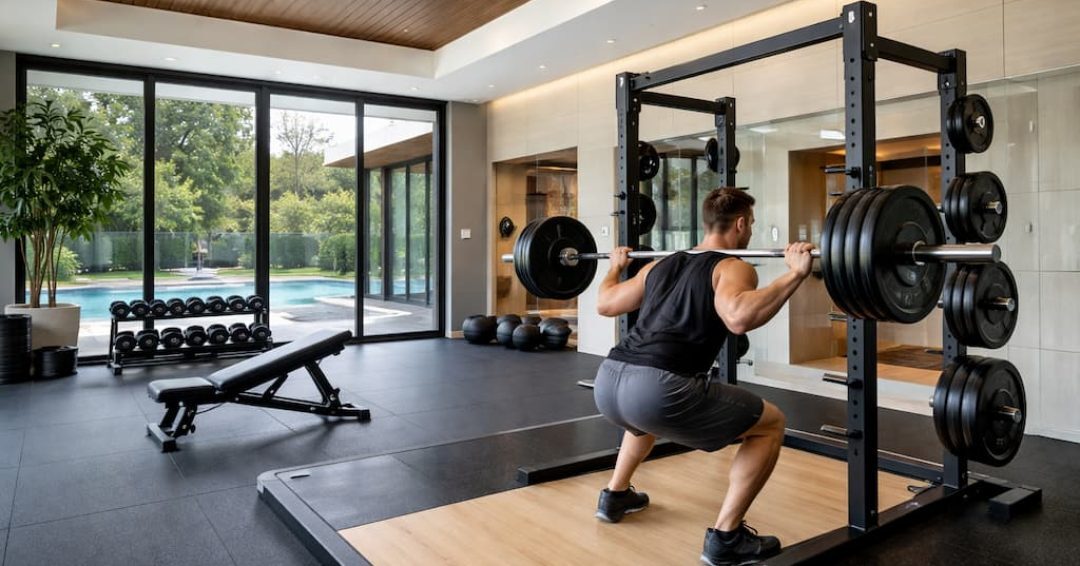
I dimension training spaces based on specific activities rather than arbitrary square footage. Olympic lifting requires 12 feet minimum ceiling height for overhead movements and 10 by 10 feet of clear floor space per lifting platform. Plyometric training needs 20 to 30 feet of unobstructed runway. Heavy rope training wants 40 to 50 feet of linear space. These aren’t suggestions – they’re functional minimums.
For comprehensive home training facilities, I plan 600 to 1,000 square feet minimum. This allows proper zoning: a strength area with platforms and racks, a functional training zone for bodyweight and dynamic movements, and cardio equipment placement that doesn’t interfere with other activities. Smaller spaces force compromises that limit training effectiveness.
Ceiling height matters more than most residential architects acknowledge. Standard 9-foot ceilings work for treadmills. They fail for anything overhead. I specify 12 to 14 feet in training spaces – this accommodates rope climbs, overhead pressing, medicine ball throws, and creates the vertical volume that makes spaces feel like legitimate facilities rather than converted basements.
Structural Considerations for Training Loads
Training equipment generates forces residential structures aren’t typically designed to handle. Dropping a loaded barbell creates impact loads of several thousand pounds. Deadlifts and squats generate substantial point loads. Plyometric landings create repetitive shock. The floor structure needs to accommodate these forces or fail prematurely.
I design training space floors for minimum 100 psf live load – double the residential standard – with additional consideration for impact resistance. This typically means concrete slab-on-grade for ground-level gyms or structural concrete over basement spaces. Wood frame floors work only with significant reinforcement: doubled joists, blocking, and engineered subfloor assemblies.
Platform areas for Olympic lifting receive dedicated structural design. I detail reinforced zones with isolation padding that protects structure while allowing safe dropping of weights. This adds $30 to $50 per square foot in platform areas but prevents the structural damage and noise transmission that happens when platforms sit directly on residential framing.
Environmental Systems for Training Spaces
Training spaces generate heat and humidity requiring substantial mechanical capacity. I design dedicated HVAC zones with cooling capacity of 500 to 700 BTU per square foot – triple residential standard. Air movement through ceiling fans or high-velocity systems creates comfortable conditions during intense activity.
Humidity control prevents equipment corrosion. I specify dedicated dehumidification where natural ventilation isn’t possible, particularly for basement training spaces where ground-coupled cooling creates condensation.
Flooring Systems for Multiple Training Modalities
I design flooring as zones matching training activities. Lifting areas get 3/4-inch rubber over plywood platforms on isolated bases. Functional training zones use 1/2-inch rubber tiles or athletic surfacing. Cardio areas use thinner rubber. This zoned approach delivers proper performance characteristics for each activity.
Recovery Space Architecture: The Missing Component
Training breaks down tissue. Recovery rebuilds it stronger. Serious athletes understand this equation. Most residential architecture ignores the recovery side entirely, focusing exclusively on training spaces while treating recovery as something that happens in regular bathrooms or bedrooms.
Cold Therapy Integration
Cold water immersion has become essential recovery protocol. But cold plunge tubs aren’t bathroom fixtures – they’re specialized equipment requiring dedicated infrastructure, space planning, and environmental design.
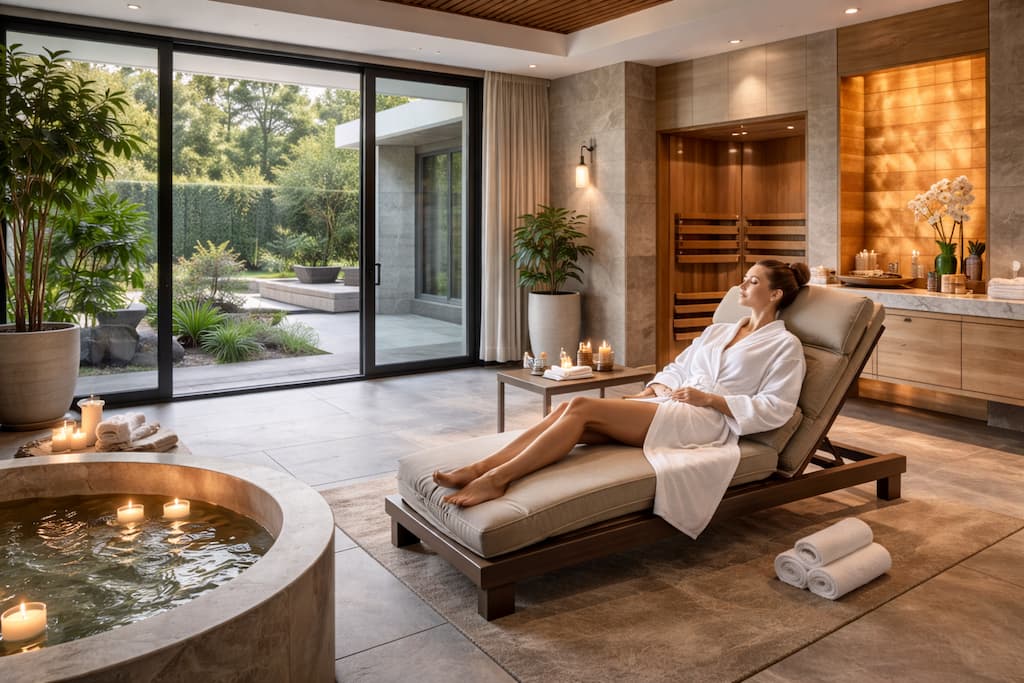
I design cold therapy spaces as dedicated rooms adjacent to training areas. The room needs floor drains, waterproof wall assemblies, ventilation to handle humidity, and space for the tub plus circulation. A 6 by 8 foot room accommodates a standard cold plunge with clearance for access and towel storage. Larger installations with multiple tubs or contrast therapy setups need proportionally more space.
Plumbing infrastructure includes dedicated water supply, drainage with adequate capacity for rapid filling and emptying, and often supplemental filtration systems. Electrical requirements include 240V circuits for chillers that maintain water temperature. I run all infrastructure during initial construction – retrofitting cold therapy adds $15,000 to $25,000 versus $5,000 to $8,000 when designed from the start.
Environmental control matters for cold therapy spaces. These rooms generate significant humidity during use. I specify dedicated exhaust ventilation, moisture-resistant finishes, and heating for comfort when not in the tub. The space should feel like a spa facility, not a mechanical room.
Sauna and Heat Therapy Design
I dimension saunas for actual use patterns. A two-person sauna needs 4 by 5 feet minimum interior dimension. Four-person installations need 6 by 7 feet. Ceiling height of 7 feet provides appropriate volume.
Traditional saunas require 240V electrical service for 6kW to 9kW heaters. I coordinate electrical rough-in during framing and locate saunas adjacent to showers and cold therapy for contrast protocols.
Bodywork and Treatment Space
I design bodywork rooms as dedicated 10 by 12 foot spaces accommodating massage tables with circulation for therapists, storage for supplies, and sinks. These rooms need quiet HVAC, individual temperature control, dimmable lighting, and comfortable flooring for standing therapists – often luxury vinyl or cork. Built-in storage for oils, linens, and equipment integrates during design rather than relying on freestanding furniture.
Hydrotherapy at Home: Spa Room Integration with Athlete Wellness Home Design
Hydrotherapy provides recovery benefits through multiple modalities – soaking tubs, whirlpools, cold plunges, and contrast systems. These installations require significant architectural planning beyond simply specifying expensive fixtures.
Hydrotherapy Infrastructure
Large soaking tubs weigh 1,200 to 2,000 pounds when filled, requiring structural engineering. I coordinate floor reinforcement with fixture selection during design. Plumbing includes high-flow fill capabilities reducing 100-gallon fill times from 15-20 minutes to 8-10 minutes. Whirlpool systems need 240V electrical with accessible service panels.
I design recovery wet rooms for athlete wellness home design with complete waterproofing: membrane under all surfaces, sloped floors to drains, and drainage for simultaneous fixture use. Ventilation requires 150 to 200 CFM minimum versus standard 50-80 CFM bathroom fans to handle high humidity loads.
Spatial Sequencing: Connecting Wellness to Living
Training spaces, recovery rooms, and spa facilities work best when organized as connected sequences rather than isolated rooms. The circulation between these spaces determines how effectively they support athletic lifestyle.
The Wellness Suite Concept in Athlete Wellness Home Design
I organize athlete wellness home design around suite concepts – connected spaces flowing logically from training through recovery to re-entry to living areas. A typical sequence progresses from changing areas to training spaces to recovery zones to showers and back to living areas.
This circulation prevents the common problem of tracking through living spaces to reach different wellness areas. An athlete can train, cold plunge, sauna, shower, and return to their bedroom or common areas without passing through family spaces or main circulation routes.
Entry and exit points matter. Direct access from exterior allows training without entering through main house areas – useful for muddy trail runs or early morning sessions that shouldn’t disturb sleeping family members. Connections to master suite areas provide private access for primary users while keeping wellness facilities accessible to guests or other family members through alternative routes.
Support Space Integration
Wellness facilities need changing areas, storage, and laundry. I design 6 by 8 foot changing spaces with bench seating and storage maintaining separation between street clothes and training gear.
Towel storage locates adjacent to wet areas – typically 20 to 30 cubic feet for towels and linens. Equipment storage requires 40 to 60 square feet with adjustable shelving for weights, bands, rollers, and accessories.
Technology and Environmental Elements in Athlete Wellness Home Design
Training spaces need displays for programming and virtual platforms, audio systems for music, and cameras for movement analysis. I run all mounting provisions and wiring during construction. Display mounts locate 4 to 5 feet above floor for viewing from training positions. Audio uses moisture-resistant speakers rated for high-humidity environments.
Network connectivity throughout anticipates equipment placement. Power planning requires 8 to 12 dedicated circuits in a 600-square-foot space versus 2 to 3 for similar living space – each motorized cardio equipment needs dedicated 20-amp circuits.
Natural Light Strategy
I locate training spaces with exterior exposure whenever possible. Large windows bring daylight and views. Ground-level or walk-out locations work better than fully buried spaces. Northern exposure provides consistent light without solar heat load; eastern exposure serves morning training sessions. When spaces must be interior, high-output LED systems on dimmers with layered lighting create functional environments.
Location Strategy Within the Home
Ground-level wellness facilities get used more than basement locations. When possible, I locate primary spaces on main level or as walk-out arrangements with direct grade access. Basement locations need high ceilings, abundant natural light, and direct exterior access to achieve expected usage.
Primary users benefit from direct connections between master suite and wellness facilities. I often design suites adjacent to or below master areas with private connections, allowing early sessions without disturbing others while maintaining separate access for family or guests.
Direct access between indoor and outdoor training areas extends versatility. I design large 10 to 12 foot glass door systems opening to terraces or pool areas, allowing training to transition seamlessly between environments.
The Real Investment in Athlete Wellness Architecture
Let’s address costs. Properly designed athlete wellness home design adds $75,000 to $200,000 to residential projects depending on scope and finishes. Here’s how that breaks down.
A 600-square-foot training space with appropriate ceiling height, structural capacity, flooring, HVAC, and electrical infrastructure costs $150 to $250 per square foot – $90,000 to $150,000. This exceeds typical residential construction costs because of the structural reinforcement, oversized mechanical systems, and specialty finishes required for functional training spaces.
Recovery spaces add significantly to costs. A cold therapy room with plunge tub and infrastructure runs $20,000 to $35,000. A custom sauna installation costs $15,000 to $30,000 depending on size and type. A dedicated bodywork room adds $8,000 to $15,000. Complete wet room recovery spaces with multiple modalities reach $60,000 to $100,000.
Support spaces – changing areas, storage, laundry – add another $15,000 to $30,000. Technology integration including audio-visual systems, data infrastructure, and connected equipment capability adds $10,000 to $25,000.
The total investment for comprehensive athlete wellness facilities typically runs $150,000 to $300,000 within a larger residential project. This represents 3% to 6% of total construction budget on $5 million to $8 million estates. Compare this to the $50,000 to $100,000 many owners spend retrofitting inadequate spaces after construction when they realize standard home gyms don’t meet their needs.
Design Considerations for Multiple Users
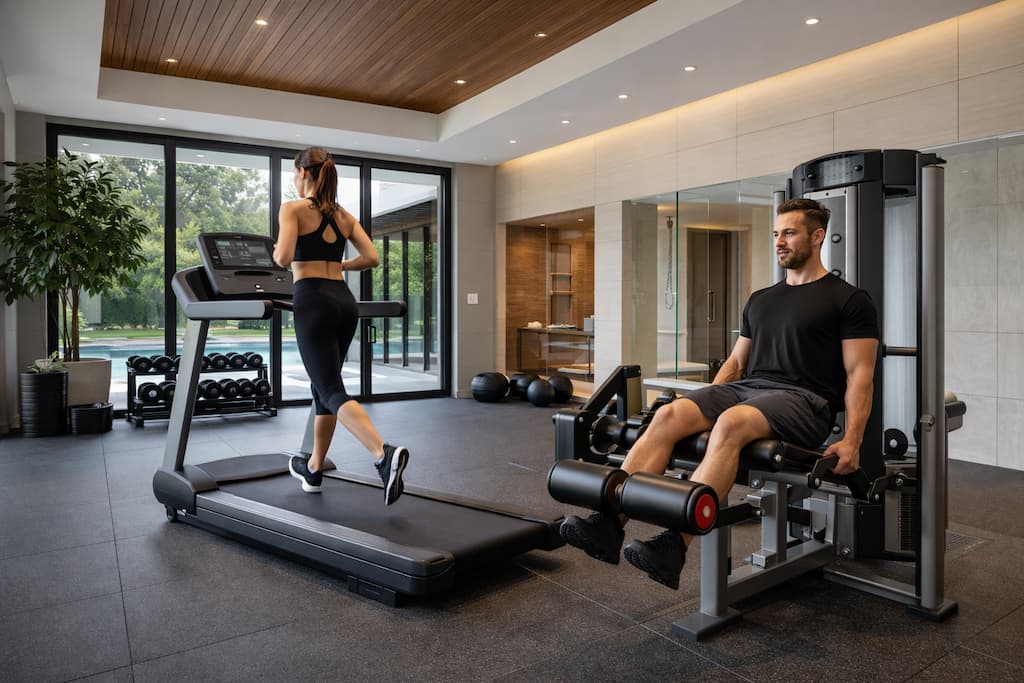
I design training spaces with zones supporting different activities simultaneously. Adequate size allows concurrent use without interference. Individual lockers or designated storage prevents territory conflicts. A 1,000-square-foot space allows two or three users training simultaneously versus 600 square feet serving one at a time.
Moving Forward with Athlete Wellness Home Design
Building a home with legitimate athlete wellness facilities requires accepting that these spaces need architectural attention comparable to primary living areas. Training and recovery aren’t basement afterthoughts – they’re specialized programs with specific requirements for structure, systems, and spatial organization.
That requires honest assessment during programming about how training and recovery actually happen. It requires engaging architects who understand wellness facility design, not just residential architecture. It requires proper structural engineering, mechanical system design, and spatial planning from the beginning of schematic design.
The athletes I work with – professionals, serious amateurs, and fitness-focused families – understand that performance spaces require proper design. They’re building homes in the Hamptons, Montana, and California where training and recovery integrate architecturally with living spaces. They accept that real wellness facilities cost more than standard gyms because they deliver functional performance rather than just equipment rooms.
If you’re planning a luxury home and athletic performance matters, start by documenting actual training and recovery protocols. Then work with an architect who can translate those requirements into architectural program and spatial design. Because athlete wellness home design succeeds when performance, recovery, and daily living are architecturally integrated from the first sketch.
Frequently Asked Questions: Athlete Wellness Home Design
Athlete Wellness Home Design
Athlete wellness home design is a residential architecture approach that integrates professional-grade training spaces, recovery zones, and spa facilities as core elements of the home rather than afterthought amenities.
Why do standard home gyms fail serious athletes?
Most home gyms lack adequate ceiling height, structural load capacity, circulation space, and recovery infrastructure, making them unsuitable for real training protocols.
How much space is needed for athlete wellness home design?
A functional training space typically requires 600–1,000 square feet, with ceiling heights of 12–14 feet and additional square footage for recovery and support spaces.
What recovery features should be included in an athlete wellness home?
Effective athlete wellness home design includes cold plunge rooms, saunas, hydrotherapy spaces, and dedicated bodywork rooms designed with proper drainage, ventilation, and structural support.
How does athlete wellness home design affect construction costs?
Properly designed athlete wellness spaces typically add 3–6% to total construction cost but prevent expensive retrofits and performance compromises later.
When should athlete wellness spaces be planned during design?
Athlete wellness home design must be addressed during schematic design so structural systems, mechanical capacity, circulation, and adjacencies support training and recovery from the start.
