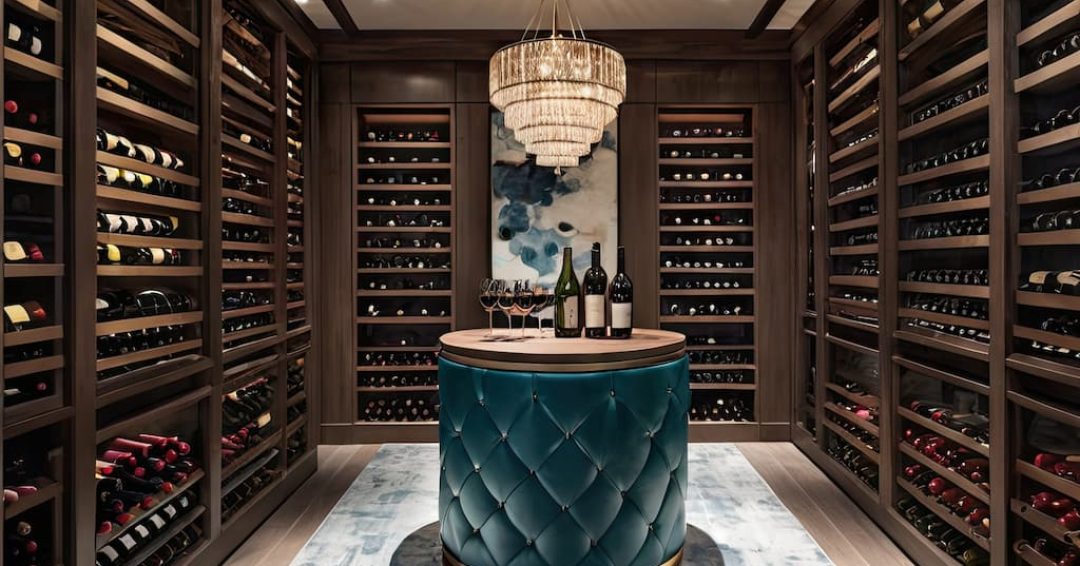
Collections need more than attractive display. They need environments that preserve value while making viewing meaningful.
This is what trophy room design actually addresses – creating spaces where valuable items can be displayed safely over time. Not just arranging objects in a room, but understanding the environmental factors, lighting requirements, and protection needs that determine whether a collection maintains its condition and value.
I’ve designed spaces for automobile collections, contemporary art, wine cellars, and rare item displays. The architectural challenge isn’t making these spaces look impressive – though that matters. The challenge is creating environments where lighting doesn’t damage finishes, where climate control maintains proper conditions, where security protects without compromising the viewing experience, and where the design serves the collection rather than just the owner’s taste.
Most rooms fail at this. They prioritize aesthetics over preservation. They use lighting that looks dramatic but causes fading or deterioration. They create climate conditions that look comfortable but accelerate aging. They design for initial impact without considering how the space functions over years of use.
Trophy room design requires understanding conservation principles that most architects never learn. The same lighting that makes a painting look vibrant in a gallery can cause irreversible damage over time. The humidity level that feels comfortable can ruin fine wine or promote corrosion on vehicle finishes. The temperature that seems reasonable can stress artwork or leather.
Each collection type has specific requirements. Vehicle displays need different lighting than artwork. Wine storage requires different climate control than rare books. What works for one collection can damage another. Designing trophy rooms means understanding these distinctions and creating environments tailored to what’s being preserved.
Beyond preservation, there’s the viewing experience. How people interact with a collection affects the design. A trophy room where you walk among displayed vehicles functions differently from a space where artwork hangs on walls. Wine cellars that include tasting areas have different spatial requirements than pure storage. The architecture needs to support how the collection gets used, not just how it looks.
Security considerations shape trophy room design in ways that aren’t obvious. High-value and rare collections need protection, but security systems can’t dominate the space or make viewing unpleasant. The balance between access and protection affects everything from window placement to door hardware to monitoring systems.
The properties that successfully showcase collections do so because preservation requirements, viewing experience, and security protocols were integrated into the architectural design from the beginning. Not added afterward as fixes to spaces that weren’t planned correctly.
Let me show you how this actually works – the practical realities of designing rooms where cars, art, wine, or rare items can be displayed properly without compromising their condition or value.
Why Display Isn’t Just About Aesthetics
Here’s the misconception: if a space looks impressive, it must be working properly. If the cars look beautiful under dramatic lighting, the display is successful. If the artwork is arranged attractively on the walls, the room functions correctly.
This assumption is where valuable collections get damaged.
Trophy rooms operate under constraints that don’t exist in typical residential spaces. You’re not just creating an attractive environment. You’re managing light exposure, controlling atmospheric conditions, preventing environmental damage, and maintaining proper security – all while making the space pleasant to spend time in.
The lighting that creates drama often creates damage. Intense spotlights that make vehicle finishes gleam generate heat that accelerates paint degradation. Track lighting positioned for visual impact concentrates UV radiation that fades fabrics and causes chemical breakdown in materials. The impressive illumination you see in showrooms uses lighting that’s acceptable for short-term display but inappropriate for long-term ownership.
Climate control in collection display rooms isn’t about comfort. It’s about stability. Human comfort zones accept temperature swings of 10 to 15 degrees and humidity variations of 20 to 30 percentage points. Collections can’t tolerate these fluctuations. Artwork suffers from expansion and contraction. Wine degrades from temperature changes. Vehicle interiors crack from humidity swings. Metal components corrode from moisture variations.
I see three common approaches that fail:
The first is treating trophy rooms as regular residential spaces with nicer finishes. Design a beautiful room, add appropriate furniture or display elements, install attractive lighting. This ignores that rare collections have environmental needs distinct from human comfort. The space might look perfect initially but causes gradual deterioration that becomes apparent over years.
The second failing approach is prioritizing visual impact over preservation. Clients want their rare collections to look impressive – which is reasonable. But when visual goals conflict with conservation requirements, some designers default to aesthetics. They use lighting that’s too bright or too warm in color temperature. They create viewing experiences that require compromising climate control. They position objects where they’re visible but exposed to damaging conditions.
The third mistake is applying generic museum standards without understanding specific collection needs. Museum conservation guidelines exist, and they’re valuable. But a museum displaying contemporary art has different requirements than a private collection of vintage automobiles. Wine storage follows principles that don’t apply to rare books. Trophy room design requires matching preservation strategies to specific collection types rather than applying uniform standards.
Successful collection display rooms balance multiple requirements simultaneously. The space needs to look appropriate for a luxury residence – not like a warehouse or laboratory. The viewing experience needs to be compelling without becoming theatrical. Security needs to be comprehensive without being oppressive. And all of this needs to happen while maintaining environmental conditions that preserve the rare collection.
This changes how you approach basic architectural elements. Windows become problematic because daylight contains UV radiation and creates temperature variations. But completely windowless spaces feel institutional. The solution involves controlled glazing, UV filtering, and positioning collections away from direct sun exposure while maintaining natural light in circulation areas.
Artificial lighting needs careful specification. You can’t select fixtures based on appearance or use residential lighting standards. Every light source gets evaluated for spectral output, heat generation, and long-term effects on materials. LED technology has improved collection lighting significantly, but even LEDs vary in quality and appropriateness for different applications.
The mechanical systems that control temperature and humidity need precision that standard residential HVAC doesn’t provide. You’re maintaining conditions within narrow ranges – often plus or minus 2 degrees Fahrenheit and plus or minus 5% relative humidity. This requires commercial-grade equipment, redundant systems for reliability, and monitoring that alerts to deviations before damage occurs.
Even the finishes and materials in trophy rooms matter for preservation. Certain paints and sealants off-gas compounds that damage rare collections. Some wood species release acids that affect nearby objects. Flooring materials can generate dust or static that’s problematic. The room itself becomes part of the preservation environment, not just a container for collections.
Properties with successful trophy rooms are ones where these requirements were understood and designed for from the beginning. Where the architect knew conservation principles, worked with lighting designers who understand museum standards, and coordinated with mechanical engineers who could deliver precise climate control. Not properties where collections were moved into spaces designed for other purposes.
Lighting Design for Rare Collection Preservation
Lighting is where trophy room design becomes technical. The wrong lighting damages rare collections. The right lighting preserves them while creating appropriate viewing conditions.
Light Damage Mechanisms
Light causes damage through two primary mechanisms: photochemical degradation and heat. Understanding both is essential for proper trophy room lighting.
Photochemical damage happens when light energy – particularly UV and blue wavelengths – breaks chemical bonds in materials. This causes fading in fabrics, color shifts in paints, embrittlement in plastics, and degradation in paper. The damage is cumulative and irreversible. Reducing light exposure slows the process but doesn’t eliminate it.
Heat from lighting accelerates all forms of deterioration. High temperatures speed chemical reactions, cause materials to dry out or become brittle, and create thermal stress through expansion and contraction. Intense localized heating from spotlights is particularly problematic.
The amount of damage depends on three factors: light intensity, spectral composition (what wavelengths the light contains), and exposure duration. You control damage by managing all three.
Museum-Quality Lighting Principles
Museum conservation standards provide the baseline for rare collection lighting:
- Intensity limits – sensitive materials like textiles, works on paper, and natural history specimens should receive no more than 50 lux (approximately 5 foot-candles). More stable materials like oil paintings can handle 150 to 200 lux. Extremely stable objects like metal and stone can tolerate higher levels.
- UV elimination – all light sources should emit essentially zero UV radiation. LEDs naturally produce little UV, but filtering may still be necessary. Incandescent and halogen sources require UV-filtering glass or lenses.
- Color rendering – lights need high Color Rendering Index (CRI) values – preferably 90 or higher – to show colors accurately. For critical applications like fine art, CRI above 95 is standard.
- Color temperature consistency – mixing different color temperatures creates unnatural appearance. Most collection lighting uses 3000K to 4000K – warm enough to feel residential but neutral enough for accurate color rendering.
LED Systems for Collections
LED technology has transformed collection lighting. Quality LED systems offer:
- Minimal UV output – LEDs produce virtually no ultraviolet radiation, eliminating a primary damage mechanism.
- Low heat generation – LEDs run cool compared to incandescent or halogen sources, reducing thermal stress on objects.
- Precise control – dimming and color temperature adjustment allow fine-tuning lighting conditions.
- Long life – quality LEDs last 50,000+ hours, reducing maintenance in spaces where fixture access might be difficult.
However, not all LEDs are suitable for collections. Low-quality LEDs can have poor color rendering, inconsistent color temperature, or excessive blue light content. Specification requires understanding LED quality metrics and selecting fixtures designed for conservation applications.
Lighting Control and Automation
Collection lighting should operate only when the space is occupied. Automated systems that turn lights on upon entry and off after departure minimize exposure without requiring manual management.
Dimming capability allows adjusting intensity based on activity. Higher levels for detailed viewing, lower levels for ambient conditions. Some systems can limit maximum intensity to ensure safe levels even when fully dimmed up.
Scheduling systems can enforce maximum exposure durations. If conservation standards recommend limiting annual light exposure to a certain level, automated scheduling can track accumulated exposure and adjust operation accordingly.
Application-Specific Lighting
Different collection types need different trophy room design lighting approaches:
Vehicle display: Automobile finishes are relatively light-stable, allowing higher intensity lighting than sensitive materials. The challenge is avoiding glare and hot spots while revealing vehicle forms and details. Adjustable track lighting with narrow beam spreads allows highlighting specific features. Indirect lighting from cove details provides ambient illumination without creating reflections in painted surfaces.
Artwork display: Picture lighting needs to illuminate the surface evenly without glare or reflections in glazing. Track-mounted fixtures with adjustable beam spreads work for most paintings. Sculptures require lighting from multiple angles to reveal form without harsh shadows. Textile art and works on paper need the most restricted lighting due to sensitivity.
Wine display: Wine storage areas benefit from low ambient lighting – enough for navigation but not bright enough to heat bottles. Display areas where bottles are shown rather than stored can use slightly higher levels, but wine is sensitive to light and should still receive minimal exposure.
Three-dimensional objects: Collectibles, sculptures, or rare items displayed in cases need lighting that reveals form without creating excessive contrast. Multiple light sources at different angles eliminate harsh shadows while maintaining modeling that shows detail.
Climate Control and Environmental Management
Temperature and humidity variations cause more damage to collections than any environmental factor except light. Stability matters more than the specific setpoint.
Requirements by Collection Type
General conservation guidelines recommend 65-70°F with variations no greater than ±2°F, and 45-55% relative humidity with variations no greater than ±5%. However, specific rare collections need different conditions:
Wine storage requires 55-58°F and 60-70% humidity. Temperature stability is critical; variations cause wine to expand and contract, potentially compromising seals.
Vehicle collections tolerate wider ranges but benefit from low humidity (40-50%) to prevent corrosion. Temperature can range from 60-75°F as long as it remains stable.
Fine art needs tight control – 68-72°F and 45-55% RH – because canvas, paper, and wood all respond to environmental changes by expanding or contracting.
Rare books and paper require cool temperatures (65-68°F) and moderate humidity (30-40%) to slow chemical degradation.
HVAC System Requirements
Standard residential HVAC systems can’t maintain trophy room conditions. You need commercial-grade equipment with:
- Dedicated systems – collection rooms should have separate HVAC isolated from the main house for independent control
- Precision control – thermostats and humidistats that respond to small deviations
- Redundancy – backup systems ensure equipment failures don’t expose rare collections to damaging conditions
- Monitoring and alarms – automated systems tracking conditions continuously
Mechanical systems for trophy rooms typically cost 2 to 3 times what equivalent square footage of residential space would require.
Air Quality
Trophy room HVAC systems should include high-efficiency particulate filtration (MERV 13+) that captures fine particles, activated carbon filtration that removes gaseous pollutants, and positive pressure that reduces infiltration of unfiltered air.
Collection-Specific Design Requirements
Vehicle Display Spaces
Automobile collections need substantial square footage and specific spatial characteristics:
- Ceiling height – minimum 12 feet for comfortable viewing and air circulation. Higher ceilings – 14 to 16 feet – feel more appropriate.
- Floor loading – vehicle weight concentrates on small tire contact patches. Floors need structural capacity for point loads ranging from 500 to 1,500+ pounds per wheel.
- Surface finishes – concrete floors can be polished, epoxy-coated, or covered with modular tiles. The finish should be chemical-resistant and easy to clean.
- Access requirements – doors need to be oversized – 10 to 12 feet wide minimum – to allow vehicle movement.
- Utility access – electrical outlets for battery tenders, floor drains if washing will happen in the space, compressed air if detailing equipment will be used.
Art Display Architecture
Art collections require specific architectural considerations:
- Wall construction – walls need to support substantial weight. Large artworks or sculptures can weigh hundreds of pounds.
- Viewing distances – large paintings need viewing distances of 8 to 12 feet. Room dimensions need to accommodate these distances.
- Flexibility – hanging systems that allow easy repositioning of artwork without wall damage provide operational flexibility.
- Storage integration – many collectors own more art than can be displayed simultaneously. Integrated storage allows rotating displays.
Wine Cellar Design
Wine storage combines technical requirements with aesthetic considerations:
- Insulation and vapor barriers – wine cellars at 55°F within homes at 70°F create significant temperature differentials. Heavy insulation and vapor barriers prevent condensation.
- Cooling systems – wine cellar cooling units maintain precise temperature and humidity while operating efficiently at temperature differentials.
- Storage capacity – racking systems accommodate bottle sizes and provide stable horizontal storage. Capacity planning should consider anticipated growth.
- Display integration – many cellars include areas where bottles are shown in addition to bulk storage, with different lighting and potentially different conditions.
Security and Protection Systems For Rare Collections
Rare collections represent significant value. Security systems need to protect against theft, damage, and unauthorized access without making the space feel like a vault.
Layered Security Approach
Effective security uses multiple layers:
Perimeter security – property-level security creates the first barrier through gates, fencing, cameras, and motion detection.
Building security – doors with commercial-grade locks, windows with security glazing or sensors, monitored entry points.
Room security – trophy rooms should have separate security zones with independent alarm systems, door/window sensors, and motion detectors.
Object-level security – high-value individual items might have additional protection through display cases with locks or discrete sensors.
Surveillance and Monitoring
Camera systems provide both deterrent value and documentation. Interior cameras should monitor trophy room entrances and high-value items. Discrete mounting provides coverage without dominating the visual environment. Remote monitoring capability allows checking conditions from anywhere.
Access Control
Limiting who can enter trophy rooms reduces risk. Electronic locks with credential-based access log all entries. Visitor protocols control when and how guests, staff, or service providers access rare collection spaces.
Environmental Monitoring
Environmental sensors protect collections from damage that’s as significant as theft. Temperature and humidity monitors alert to HVAC failures. Water sensors detect leaks. Smoke and gas detection provide early warning. These systems should alert to both the property and remote monitoring services.
Insurance Considerations
Insurance for valuable collections often requires specific security measures. Understanding insurance requirements during design prevents discovering needed systems after construction is complete. Documentation – detailed photos, professional appraisals, condition reports – establishes value for insurance purposes.
Creating Trophy Room Designs That Actually Work
Everything I’ve described – the lighting requirements, the climate control precision, the security systems, the collection-specific needs – might make trophy room design sound excessively technical. It is technical. But the technical requirements exist for a reason: they’re what actually protects rare collections while making them enjoyable to own.
Properties exist right now with trophy rooms that function beautifully. Where automobile collections remain in pristine condition despite years of display. Where artwork maintains its color and integrity. Where wine ages properly despite being stored in a residence rather than a commercial facility. Where valuable items are secure yet accessible for viewing and enjoyment.
These successful spaces share common characteristics: they were designed specifically as trophy rooms from the beginning, with preservation requirements integrated into the architecture. The lighting was specified for conservation, not just visual effect. The climate control was engineered for precision, not just comfort. The security was designed for actual threats, not theatrical effect.
The Core Principles
Trophy rooms that work follow these principles:
Preservation comes first: Visual impact matters, but not at the expense of collection integrity. If a design choice compromises preservation, the design needs to change. Collections are irreplaceable. Design decisions can be reconsidered.
Technical requirements shape architecture: The HVAC systems, the lighting specifications, the security needs – these aren’t add-ons to architectural design. They are architectural design. The room exists to serve the collection, which means the collection’s needs determine how the space is shaped.
Precision costs more upfront but saves long-term: Museum-quality lighting, commercial-grade climate control, comprehensive security systems increase initial construction costs. But they prevent damage, reduce maintenance, and protect value over decades of ownership. The investment pays back through preservation.
Flexibility accommodates change: Collections evolve. Design should allow for growth, reconfiguration, or shifts in collection focus without requiring major reconstruction. Infrastructure capacity, adaptable systems, and thoughtful planning create this flexibility.
Professional expertise matters: Trophy room design requires knowledge that most architects don’t have. Conservation principles, specialized lighting, precision HVAC, collection-specific requirements – these need professionals who work in this specialized area regularly.
The Real Requirements
Let me be direct about what proper trophy rooms actually require:
Space allocation: Trophy rooms need dedicated square footage with appropriate dimensions for the collection type. Vehicle displays need 300 to 500 square feet per car minimum. Art galleries need wall space and viewing distances. Wine cellars need volume for storage plus any tasting or display areas.
Budget allocation: Trophy room construction costs roughly 2 to 3 times typical residential space per square foot. A 1,000 square foot trophy room might cost $400 to $600 per square foot compared to $150 to $200 for standard luxury residential space. This reflects specialized systems, not premium finishes.
Systems infrastructure: Electrical capacity for lighting and controls. HVAC capacity for climate control. Data/communication for security and monitoring. These systems need dedicated capacity and often separate circuits or mechanical systems from the main house.
Ongoing operation: Trophy rooms have higher utility costs than typical space – climate control operating continuously, monitoring systems always active. Annual operating costs might be $3,000 to $8,000 for a medium-sized trophy room depending on climate and collection requirements.
When Trophy Rooms Make Sense
Not every collection needs a dedicated trophy room. Small collections or items without special preservation needs can integrate into regular living spaces. But when rare collections reach a certain value or scale, or when items have specific environmental requirements, dedicated trophy rooms become necessary rather than optional.
The value proposition is straightforward: proper display and storage protect investment and enhance enjoyment. Collections improperly stored or displayed deteriorate, losing value and aesthetic appeal. Collections properly housed maintain condition, protect value, and provide greater satisfaction to owners.
For collectors who are serious about their acquisitions – whether vehicles, art, wine, or other valuable items – trophy rooms designed with proper preservation principles provide the environment these collections deserve.
Start With Understanding Your Rare Collections
If you’re planning a space for a valuable collection, the design conversation should start with understanding what you’re collecting and how you want to interact with it.
The questions to address:
- What are the environmental requirements for your specific collection type?
- How do you want to view or interact with the collection daily?
- What security level is appropriate for the collection value?
- How might the collection grow or change over time?
- What insurance requirements exist for this collection?
These questions determine whether you need a climate-controlled vehicle gallery, a museum-quality art space, a professional wine cellar, or some combination of different collection types in a single property.
I can assess your collection requirements and tell you what design approach will work. Not generic solutions, but analysis based on understanding conservation principles, specialized lighting, precision climate control, and collection-specific architectural requirements. What systems you actually need. How the space should be organized. What the realistic budget and timeline look like.
That assessment might confirm your initial vision is achievable. Or it might reveal requirements you hadn’t considered that affect planning or budget. Either way, you’re making decisions with accurate information rather than discovering problems after construction.
The worst trophy rooms are the ones designed without understanding preservation requirements – spaces that look impressive initially but cause gradual collection damage. The best trophy rooms are ones where conservation needs were understood and designed for from the beginning.
If you’re planning spaces for valuable collections, let’s discuss your specific requirements. I work with clients who understand their collections deserve proper preservation – not just attractive display, but environments that actually protect value and condition over time.
Because when collection display rooms are designed correctly, they enhance both the value of what you own and the enjoyment of owning it. They solve real preservation challenges while creating spaces that are genuinely pleasant to use. They represent not just successful architecture, but successful stewardship of valuable items.
That’s what makes the technical complexity worthwhile – creating spaces where collections are both properly preserved and properly celebrated.
Trophy Room Design Frequently Asked Questions
What is trophy room design and why does it matter for rare collections?
Trophy room design focuses on creating architectural environments that preserve valuable collections while making them enjoyable to view. Unlike typical residential rooms, these spaces must control lighting, climate, security, and material finishes to protect items from long-term deterioration.
Why can lighting cause damage to cars, art, or rare objects?
Improper lighting introduces UV exposure and heat, which cause fading, chemical breakdown, and material stress. Even dramatic lighting that looks impressive can accelerate degradation over time if not designed to museum-quality standards.
What climate conditions are required for a proper trophy room?
Rare collections require tight control of temperature and humidity—typically within ±2°F and ±5% relative humidity. Fluctuations can warp artwork, degrade wine, crack leather upholstery in vehicles, and promote corrosion in metals. Standard residential HVAC is not precise enough for these requirements.
Do different types of collections need different trophy room designs?
Yes. Cars, artwork, wine, rare books, and three-dimensional collectibles each have unique lighting, climate, and spatial needs. A design that works for one collection can cause damage to another, which is why specialized planning is essential.
Why is security an important part of trophy room design?
High-value collections need layered security, including building-level protection, room-level monitoring, controlled access, and sometimes object-level measures. The goal is to provide protection without making the space feel like a vault.
What factors influence the cost of building a trophy room?
Trophy rooms require museum-grade lighting, precision HVAC, security infrastructure, and collection-specific materials. As a result, they typically cost 2–3× more per square foot than standard residential space and have higher annual operating requirements.